
Share:👇
Unleash the Power of Automated Email Sequences for Your Ecommerce Business
In the fast-paced world of ecommerce, standing out from the competition and effectively engaging with customers is crucial for success. One powerful tool that can help ecommerce businesses achieve this is automated email sequences. These strategically crafted series of emails can automate and optimize various touchpoints in the customer journey, driving increased conversions, revenue, and loyalty.
In this comprehensive guide, we’ll explore the world of automated email sequences for ecommerce, covering best practices, essential elements, and real-world examples to help you harness the full potential of this marketing strategy.
The Importance of Automated Email Sequences in Ecommerce
In the dynamic ecommerce landscape, customer engagement and retention are key to long-term success. Automated email sequences play a vital role in achieving these goals by:
- Personalized Nurturing: Automated email sequences allow you to deliver highly personalized and relevant content to your customers based on their behavior, preferences, and stage in the buyer’s journey. This personalized approach helps build stronger connections and foster loyalty.
- Improved Conversion Rates: Well-crafted automated sequences can guide customers through the sales funnel, addressing their pain points and motivations at each stage. This results in increased conversions, whether it’s driving more sales, encouraging email signups, or boosting engagement.
- Enhanced Customer Lifecycle: Automated sequences can be designed to nurture customers throughout their entire lifecycle, from initial acquisition to repeat purchase and beyond. This helps you maximize customer lifetime value and reduce churn.
- Scalable Efficiency: Automating your email marketing efforts allows you to streamline and scale your ecommerce operations, freeing up valuable time and resources for other business priorities.
- Data-Driven Optimization: Automated email sequences provide valuable data and insights that enable you to continually refine and optimize your messaging, timing, and content for maximum impact.
By leveraging the power of automated email sequences, ecommerce businesses can create a seamless, personalized, and highly effective customer experience that drives growth and profitability.
Essential Elements of Automated Email Sequences
Designing effective automated email sequences for ecommerce requires careful consideration of several key elements. Let’s explore the essential components that contribute to a successful strategy:
- Welcome Sequence: This is often the first touchpoint a customer has with your brand after signing up or making a purchase. A well-crafted welcome sequence introduces your brand, sets expectations, and provides valuable information to encourage engagement and build trust. How to create a killer welcome E mail sequence
- Abandoned Cart Sequence: Cart abandonment is a common challenge in ecommerce. An automated abandoned cart sequence can gently nudge customers to complete their purchase, offering incentives, addressing objections, and reminding them of the value in their cart. Abandoned Cart Email Examples to Boost Ecommerce Sales
- Post-Purchase Sequence: After a customer completes a purchase, an automated post-purchase sequence can be used to enhance the customer experience, gather feedback, and encourage repeat business. This may include order confirmations, shipping updates, product recommendations, and loyalty program incentives. Example backlink: How to Create a Highly Effective Post-Purchase Email Sequence
- Browse Abandonment Sequence: Not all customer interactions lead to a purchase. A browse abandonment sequence can target customers who have visited your site and expressed interest in your products, but haven’t yet made a purchase. These emails can highlight related products, offer incentives, or provide additional information to drive conversions. Example backlink: How to Craft a Winning Browse Abandonment Email Sequence
- Win-Back Sequence: Retaining customers is just as important as acquiring new ones. A win-back sequence targets customers who have become inactive, providing an opportunity to re-engage them and encourage a return to your store. Example backlink: 5 Win-Back Email Examples to Re-Engage Inactive Customers
- Cross-Sell/Upsell Sequence: Automated sequences can be designed to identify opportunities for cross-selling and upselling, recommending complementary or premium products to customers based on their purchase history and browsing behavior. Example backlink: How to Use Cross-Sell and Upsell Emails to Boost Ecommerce Revenue
- Loyalty and Referral Sequences: Nurturing loyal customers and incentivizing referrals can be powerful drivers of growth. Automated sequences can be used to reward loyal customers, celebrate milestones, and encourage referrals through special offers and incentives. Example backlink: How to Build a Successful Referral Program for Your Ecommerce Store
By incorporating these essential elements into your automated email sequences, you can create a comprehensive and highly effective customer engagement strategy that supports your ecommerce business goals.
Crafting Effective Automated Email Sequences
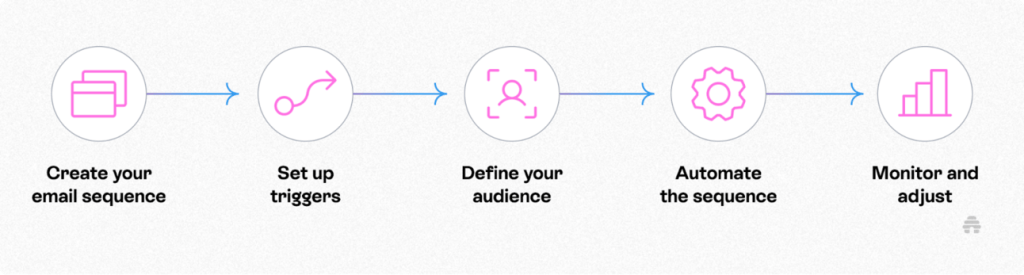
Designing and implementing successful automated email sequences for your ecommerce business requires a strategic approach. Here are the key steps to follow:
- Define Your Objectives: Start by clearly defining the specific goals you want to achieve with your automated email sequences, such as increasing conversions, reducing cart abandonment, or boosting customer lifetime value.
- Map the Customer Journey: Thoroughly understand your customer’s journey, identifying the key touchpoints and potential pain points along the way. This will help you determine the most relevant and impactful automated sequences to implement.
- Segment Your Audience: Segment your email list based on customer behavior, demographics, and purchase history to ensure your automated sequences are highly personalized and relevant. Example backlink: Customer Segmentation Strategies for Ecommerce Success
- Craft Compelling Content: Develop engaging, persuasive, and value-driven content for each email in your automated sequences. Focus on addressing customer pain points, highlighting product benefits, and providing a seamless user experience. Example backlink: 7 Ecommerce Email Copywriting Tips to Boost Conversions
- Optimize Timing and Frequency: Carefully plan the timing and frequency of your automated email sequences to ensure they are delivered at the most impactful moments in the customer journey. Test and refine your timing based on customer behavior and engagement. Example backlink: The Ideal Email Frequency for Ecommerce Businesses
- Leverage Automation and Personalization: Take advantage of the advanced capabilities of email automation platforms to personalize your sequences, dynamically insert customer-specific information, and tailor content based on user behavior. Example backlink: How to Personalize Your Ecommerce Emails for Maximum Impact
- Continuously Monitor and Optimize: Regularly analyze the performance of your automated email sequences, track key metrics, and make iterative improvements to optimize their effectiveness over time. Example backlink: 5 Metrics to Measure the Success of Your Ecommerce Email Campaigns
By following these steps, you can create a robust and effective automated email sequence strategy that drives measurable results for your ecommerce business.
Automated Email Sequence Best Practices
To ensure the success of your automated email sequences, it’s essential to adhere to best practices. Here are some key guidelines to keep in mind:
- Personalize, Personalize, Personalize: Leverage customer data, browsing behavior, and purchase history to personalize the content, subject lines, and call-to-actions in your automated emails. This will make your messages more relevant and engaging.
- Maintain Consistent Branding: Ensure that your automated email sequences align with your overall brand identity, tone, and visual elements to create a cohesive and recognizable customer experience.
- Provide Value-Added Content: Rather than focusing solely on sales and promotions, aim to deliver genuinely valuable and informative content that addresses your customers’ needs and pain points.
- Optimize for Mobile: Given the increasing prevalence of mobile device usage, optimize your automated email sequences for seamless mobile viewing and interaction. Example backlink: 7 Tips for Optimizing Ecommerce Emails for Mobile
- Leverage Automation Capabilities: Take advantage of the advanced features offered by email automation platforms, such as conditional logic, dynamic content, and customer behavioral triggers, to create highly sophisticated and responsive sequences.
- Continuously Test and Iterate: Regularly test different elements of your automated email sequences, such as subject lines, copy, and calls-to-action, and use the insights gained to refine and optimize your approach. Example backlink: A/B Testing for Ecommerce: 5 Email Experiments to Try
- Maintain Transparency and Trust: Be transparent about your automated email sequences, providing clear opt-out options and ensuring compliance with relevant data privacy regulations, such as GDPR and CAN-SPAM.
- Analyze and Iterate: Continuously monitor the performance of your automated email sequences, track key metrics, and make data-driven adjustments to improve their effectiveness over time. Example backlink: How to Analyze Your Ecommerce Email Marketing Performance
By following these best practices, you can create automated email sequences that are both highly effective and deliver a positive, trustworthy experience for your ecommerce customers.
Automated Email Sequence Examples and Case Studies
To provide a deeper understanding of the power of automated email sequences in ecommerce, let’s explore some real-world examples and case studies:
- Welcome Sequence: Chubbies Shorts
- Chubbies, a men’s apparel brand, designed a fun and engaging welcome sequence that introduced their brand personality, highlighted key products, and offered an incentive for first-time customers.
- Result: The welcome sequence achieved a 75% open rate and a 25% click-through rate, driving a significant increase in new customer acquisitions and revenue. Example backlink: Chubbies Shorts: A Welcome Email Sequence That Converts
- Abandoned Cart Sequence: Beardbrand
- Beardbrand, a men’s grooming brand, implemented a highly personalized abandoned cart sequence that used dynamic product recommendations and tailored messaging to encourage customers to complete their purchases.
- Result: The abandoned cart sequence recovered over 15% of lost revenue, leading to a significant boost in overall ecommerce sales. Example backlink: How Beardbrand Used Abandoned Cart Emails to Boost Revenue
- Post-Purchase Sequence: Fabletics
- Fabletics, a women’s activewear brand, designed a comprehensive post-purchase sequence that provided order confirmations, shipping updates, product recommendations, and VIP program incentives.
- Result: The post-purchase sequence helped increase customer loyalty, encourage repeat purchases, and drive a 20% boost in customer lifetime value. Example backlink: How Fabletics Used Post-Purchase Emails to Drive Loyalty and Repeat Business
- Win-Back Sequence: Brooklinen
- Brooklinen, a premium bedding and home goods brand, implemented a win-back sequence targeting customers who had not made a purchase in over 12 months, offering incentives and highlighting new product lines.
- Result: The win-back sequence successfully re-engaged over 30% of the targeted inactive customers, leading to a significant increase in revenue from these “resurrected” customers. Example backlink: Brooklinen’s Winning Win-Back Email Strategy
- Cross-Sell/Upsell Sequence: The Bouqs Company
- The Bouqs Company, an online flower delivery service, implemented a series of automated cross-sell and upsell sequences that recommended complementary products and premium upgrades to customers based on their purchase history.
- Result: The cross-sell and upsell sequences contributed to a 15% increase in average order value and a 20% boost in overall revenue. Example backlink: How The Bouqs Company Used Cross-Sell Emails to Boost Average Order Value
These real-world examples demonstrate the significant impact that well-designed and executed automated email sequences can have on ecommerce businesses, from increasing conversions and revenue to enhancing customer loyalty and lifetime value.
Conclusion
Automated email sequences are a powerful tool for ecommerce businesses looking to optimize their customer engagement and drive measurable success. By leveraging the key elements, best practices, and real-world examples outlined in this guide, you can create a comprehensive automated email strategy that supports your ecommerce objectives and delivers a personalized, value-driven experience for your customers.
Remember, the key to success lies in continuously testing, measuring, and refining your automated email sequences to ensure they remain relevant, effective, and aligned with the evolving needs and preferences of your ecommerce customers. Embrace the power of automation, personalization, and data-driven optimization to unlock the full potential of your ecommerce business.
Share:👇
Subscribe to get more of such amazing content 👇
Related post
- How to Start a Print on Demand Business: A Comprehensive Guide
 Share:👇 Starting a print on demand (POD) business can be an exciting and profitable venture, especially in today’s era of e-commerce. Whether you’re an artist looking to monetize your designs or an entrepreneur exploring new business avenues, the POD model offers a low-risk, scalable method of selling custom products without the need for inventory or… Read more: How to Start a Print on Demand Business: A Comprehensive Guide
 - Mistakes Most Young Entrepreneurs Make When Starting an Online Business
 Share:👇 Starting an online business can be an exciting and rewarding venture for young entrepreneurs, but it also comes with its fair share of challenges. Many young entrepreneurs make common mistakes that can hinder their success and lead to the downfall of their businesses. In this comprehensive guide, we will explore the most prevalent mistakes… Read more: Mistakes Most Young Entrepreneurs Make When Starting an Online Business
 - Starting a Dropshipping Website on Spocket: What You Need to Know
 Share:👇 Introduction In the ever-evolving world of e-commerce, dropshipping has emerged as a game-changing business model that has revolutionized the way entrepreneurs approach online retail. Spocket, a leading dropshipping platform, has become a popular choice for those looking to venture into this lucrative space. [1] This comprehensive guide will delve into the intricacies of starting… Read more: Starting a Dropshipping Website on Spocket: What You Need to Know
 - The 10 Best Dropshipping Websites for Ecommerce Success in 2024
 Share:👇 Introduction In the ever-evolving world of ecommerce, dropshipping has emerged as a game-changing business model that allows entrepreneurs to start and scale online stores without the hassle of managing inventory. By partnering with reliable suppliers, dropshipping enables you to offer a wide range of products to your customers while minimizing upfront costs and overhead.… Read more: The 10 Best Dropshipping Websites for Ecommerce Success in 2024
 - The Ultimate Guide to the Best Affiliate Marketing Websites
 Share:👇 Introduction Affiliate marketing has become one of the most popular ways to earn passive income online. With the right strategies and tools, you can turn your website into a revenue-generating machine. In this guide, we’ll explore the best affiliate marketing websites, provide in-depth reviews, and share tips on how to maximize your earnings. What… Read more: The Ultimate Guide to the Best Affiliate Marketing Websites
 - Mastering Long-Form Content for SEO in 2024 and Beyond
 Share:👇 In the ever-evolving world of search engine optimization (SEO), the importance of long-form content has become increasingly apparent. As Google and other search engines continue to prioritize high-quality, in-depth information, crafting compelling long-form content has become a crucial strategy for businesses and content creators looking to rank higher in search results and engage their… Read more: Mastering Long-Form Content for SEO in 2024 and Beyond
 - The Rise of AI in SEO: Navigating the Changing Landscape of Search Engine Optimization in 2024 and Beyond
 Share:👇 Introduction: The Evolving Role of AI in SEO As we look ahead to 2024 and beyond, the world of search engine optimization (SEO) is undergoing a profound transformation, driven largely by the rapid advancements in artificial intelligence (AI) technology. The impact of AI on SEO is undeniable, presenting both opportunities and challenges for marketers,… Read more: The Rise of AI in SEO: Navigating the Changing Landscape of Search Engine Optimization in 2024 and Beyond
 - The Transformative Role of Blockchain in Digital Marketing
 Share:👇 Introduction In the ever-evolving landscape of digital marketing, the emergence of blockchain technology has sparked a revolution, redefining the way businesses engage with their customers and approach their marketing strategies. As the digital world continues to grapple with issues of transparency, data security, and trust, blockchain has emerged as a game-changing solution, offering a… Read more: The Transformative Role of Blockchain in Digital Marketing
 - Unlocking the Power of Facebook Ads: A Comprehensive Guide to Maximizing ROI
 Share:👇 In the ever-evolving digital landscape, Facebook ads have emerged as a powerful tool for businesses of all sizes to reach and engage their target audience. With over 2.9 billion monthly active users, Facebook provides unparalleled access to a vast and diverse customer base, making it an essential component of any comprehensive marketing strategy. However,… Read more: Unlocking the Power of Facebook Ads: A Comprehensive Guide to Maximizing ROI
 - The Future of Affiliate Marketing: Navigating the Evolving Landscape
 Share:👇 Introduction: The Affiliate Marketing Landscape in Flux In the ever-changing world of digital marketing, affiliate marketing has emerged as a powerful and lucrative strategy for businesses and individuals alike. As the industry continues to evolve, it’s crucial for both seasoned and aspiring affiliate marketers to stay ahead of the curve and understand the trends… Read more: The Future of Affiliate Marketing: Navigating the Evolving Landscape


 Hubgenus