
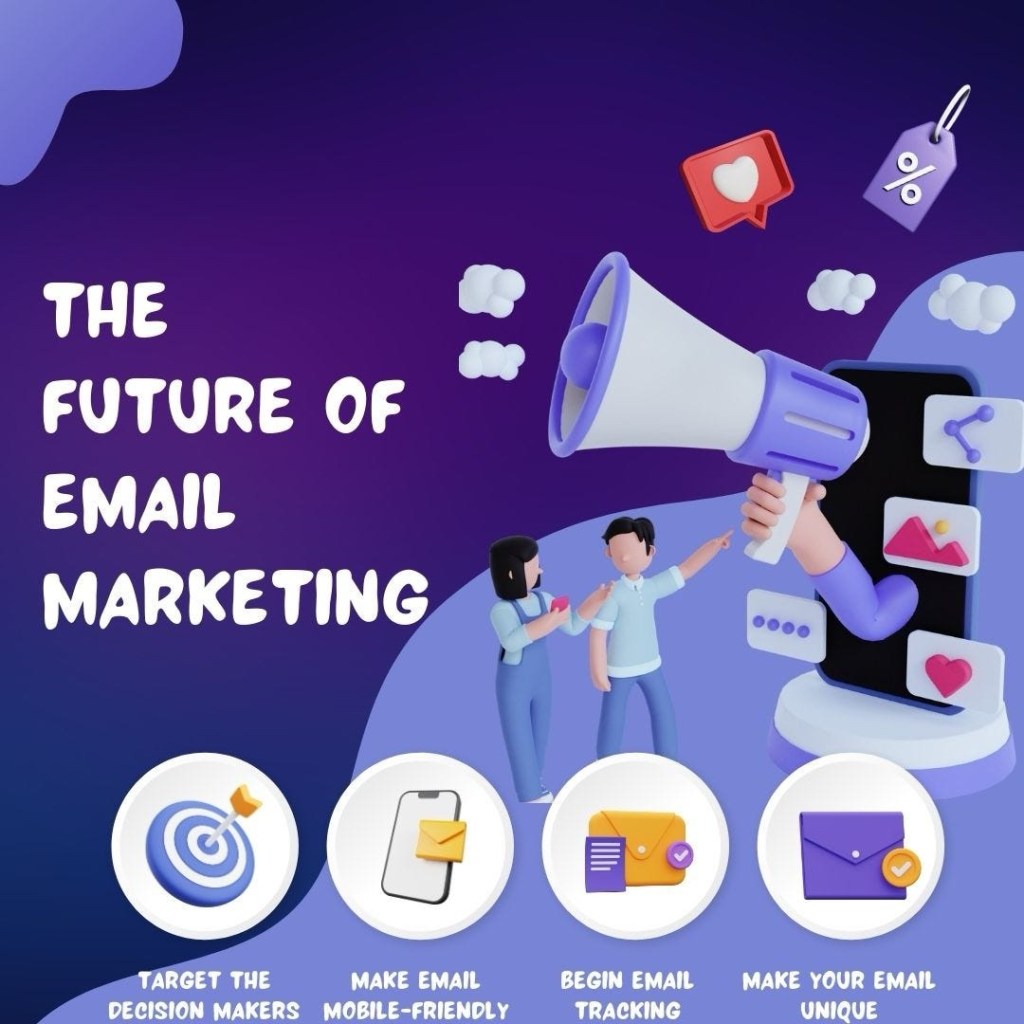
Share:👇
Introduction
In the ever-evolving world of digital marketing, email has remained a steadfast and powerful tool for businesses of all sizes. As we look towards the future, the question on many marketers’ minds is: what does the future hold for email marketing?
With the rise of new communication channels, shifting consumer preferences, and advancements in technology, the landscape of email marketing is poised for significant changes. In this comprehensive 4,000-word article, we’ll explore the key trends, challenges, and opportunities that will shape the future of email marketing.
The Enduring Importance of Email
Despite the emergence of various social media platforms and messaging apps, email remains a crucial component of digital marketing strategies. In fact, according to the Content Marketing Institute, around two-thirds of content marketers use email newsletters or other email distribution to reach their audience [1].
The reasons for email’s continued relevance are multifaceted. Firstly, email provides marketers with a direct and owned communication channel, allowing them to reach their audience without the interference of algorithms or platform policies [2]. Unlike social media, where platforms control the visibility of content, email gives businesses the power to deliver their message directly to the inbox of their subscribers.
Secondly, email marketing has consistently demonstrated its effectiveness in driving tangible results. A financial client of one of the experts interviewed for this article reported that a two-email campaign generated $2.5 million in deposits [3], highlighting the powerful performance of well-executed email marketing campaigns.
Moreover, the ubiquity of email usage cannot be overstated. According to HubSpot, 99% of email users check their inbox every day, with some checking it up to 20 times a day. This level of engagement and accessibility makes email a valuable channel for reaching and engaging with customers.
Adapting to Changing Consumer Preferences
While email’s importance remains undisputed, the future of email marketing will be shaped by the evolving preferences and behaviors of consumers. As new communication channels emerge and digital natives come of age, marketers must adapt their strategies to meet the changing needs and expectations of their audience.
The Rise of Gen Z and Millennials
One of the most significant shifts in the email marketing landscape is the growing influence of younger generations, particularly Gen Z and Millennials. These digital-native consumers have different communication preferences and expectations compared to previous generations.
According to one expert, some CEOs have reported difficulty in reaching their Gen Z and millennial employees through email, instead turning to social media platforms to connect with this demographic [1]. This shift in communication preferences poses a challenge for email marketers, who must find ways to engage these younger audiences effectively.
To adapt to the needs of Gen Z and Millennials, email marketers should consider the following strategies:
- Increased Personalization: Younger generations have come to expect a high degree of personalization in their digital experiences. Leveraging data and advanced segmentation techniques to deliver hyper-personalized email content can help capture the attention of these tech-savvy consumers.
- Mobile-Optimized Design: With the majority of email opens occurring on mobile devices, it is crucial to ensure that email campaigns are optimized for seamless mobile viewing and interaction. This includes responsive design, concise content, and easy-to-use call-to-action buttons.
- Integrating with Social Media: Recognizing the preference of younger audiences for social media, email marketers should explore ways to integrate their email campaigns with social platforms. This could involve sharing email content on social channels, leveraging user-generated content, or encouraging social sharing of email campaigns.
- Emphasis on Interactivity: Younger consumers often respond better to interactive email elements, such as surveys, quizzes, or gamified experiences. Incorporating these interactive features can help increase engagement and make email marketing more appealing to Gen Z and Millennials.
By adapting their email strategies to cater to the evolving preferences of younger generations, marketers can ensure that email remains a relevant and effective channel for reaching and engaging these influential consumer segments.
The Demand for Relevance and Personalization
Across all age groups, consumers are increasingly demanding more relevant and personalized email content. As the volume of digital communication continues to grow, individuals are becoming more selective about the messages they engage with, prioritizing those that are tailored to their specific interests and needs.
To meet this demand for relevance, email marketers must invest in advanced segmentation and personalization techniques. This may involve leveraging data from various sources, such as browsing behavior, purchase history, and demographic information, to create highly targeted email campaigns.
One expert emphasizes the importance of personalization, stating that “highly personalized, relevant, and authentic email content will continue to be tough to unseat in terms of performance” [3]. By delivering content that is truly relevant to the recipient, email marketers can increase engagement, build stronger customer relationships, and drive better business outcomes.
The Rise of Interactive and Multimedia Content
As consumers become more accustomed to engaging with dynamic and visually-appealing content across various digital platforms, email marketing must evolve to meet these expectations. The future of email marketing will likely see a greater emphasis on interactive and multimedia elements within email campaigns.
Incorporating features such as interactive videos, animated GIFs, surveys, and quizzes can help capture the attention of recipients and encourage deeper engagement. These interactive elements not only make email campaigns more visually appealing but also provide valuable data and insights that can inform future marketing strategies.
Additionally, the integration of augmented reality (AR) and virtual reality (VR) technologies within email campaigns could offer new and innovative ways for brands to engage with their audience. As these technologies become more accessible and user-friendly, email marketers may explore ways to incorporate them into their campaigns, creating immersive and memorable experiences for their subscribers.
By embracing the power of interactive and multimedia content, email marketers can differentiate their campaigns, enhance the user experience, and ultimately drive stronger results.
The Impact of Technological Advancements
The future of email marketing will also be shaped by the rapid advancements in technology. From artificial intelligence (AI) to data analytics, these technological innovations are poised to transform the way email campaigns are developed, executed, and optimized.
The Rise of AI-Powered Email Marketing
Artificial intelligence is already making its mark on the email marketing landscape, and its influence is only expected to grow in the years to come. AI-powered tools and algorithms can assist email marketers in a variety of ways, including:
- Personalization and Segmentation: AI can analyze vast amounts of customer data to identify patterns and insights, enabling marketers to create highly personalized email content and segment their audience with greater precision.
- Automated Content Generation: AI-powered tools, such as natural language processing (NLP) and machine learning, can assist in the creation of email content, from subject lines and body copy to personalized product recommendations.
- Predictive Analytics: AI can help email marketers anticipate customer behavior, predict engagement levels, and optimize campaign strategies based on data-driven insights.
- Intelligent Optimization: AI can continuously monitor and analyze email campaign performance, automatically adjusting elements like send times, subject lines, and content to improve results.
As AI technology continues to evolve, email marketers will have access to increasingly sophisticated tools and capabilities that can help them deliver more personalized, relevant, and effective email campaigns.
The Importance of Data-Driven Insights
The future of email marketing will also be heavily influenced by the growing importance of data-driven insights. As the volume of customer data continues to expand, email marketers must leverage advanced analytics and data visualization tools to extract meaningful insights that can inform their strategies.
By analyzing metrics such as open rates, click-through rates, conversion rates, and subscriber engagement, email marketers can gain a deeper understanding of their audience’s preferences and behaviors. This data-driven approach can help them make more informed decisions about email content, timing, and optimization, ultimately leading to improved campaign performance and better business outcomes.
Moreover, the integration of data from various sources, including website analytics, customer relationship management (CRM) systems, and third-party data providers, can provide a more holistic view of the customer journey. This cross-channel data can enable email marketers to create more seamless and personalized experiences for their subscribers.
As the importance of data-driven insights continues to grow, email marketers who invest in robust data analysis and visualization capabilities will be better positioned to adapt to the evolving needs of their audience and stay ahead of the competition.
The Impact of Privacy Regulations
The future of email marketing will also be shaped by the ongoing evolution of privacy regulations, such as the General Data Protection Regulation (GDPR) and the California Consumer Privacy Act (CCPA). These regulations have introduced new requirements and restrictions around the collection, use, and storage of customer data, which can have significant implications for email marketing strategies.
To comply with these regulations, email marketers must ensure that they have obtained explicit consent from their subscribers, provide clear and transparent privacy policies, and offer users the ability to manage their data preferences. Failure to adhere to these regulations can result in hefty fines and damage to a brand’s reputation.
Moreover, the phasing out of third-party cookies, as announced by Google, will further impact the way email marketers collect and utilize customer data. This shift towards a more privacy-centric digital landscape will require email marketers to explore alternative data sources and strategies, such as first-party data collection, contextual targeting, and the use of email-based identifiers.
As privacy regulations continue to evolve, email marketers must stay informed, adapt their practices, and prioritize the protection of customer data to maintain the trust and loyalty of their audience.
Emerging Trends and Opportunities
As the email marketing landscape continues to evolve, several emerging trends and opportunities are poised to shape the future of this digital marketing channel.
The Rise of Niche Email Marketing
One trend that is gaining traction is the rise of niche email marketing. As the digital landscape becomes increasingly crowded, businesses are recognizing the value of targeting specific, well-defined audience segments with highly relevant and specialized content.
Niche email marketing allows brands to differentiate themselves, build deeper connections with their audience, and potentially achieve higher engagement and conversion rates. By focusing on a specific industry, interest group, or demographic, email marketers can create a sense of community and exclusivity, fostering stronger loyalty and brand advocacy among their subscribers.
Moreover, the fragmentation of communication channels, such as the decline of social media platforms, may further drive the need for niche email marketing. As consumers become more selective about the digital content they engage with, email marketers who can provide highly targeted and valuable information will be better positioned to capture their attention and loyalty.
The Resurgence of Email Newsletters
Closely related to the rise of niche email marketing is the resurgence of email newsletters. As consumers become overwhelmed by the sheer volume of digital content, they are increasingly seeking out curated and personalized information sources, such as email newsletters.
Email newsletters offer a unique opportunity for brands to position themselves as trusted industry experts, thought leaders, and valuable information providers. By delivering high-quality, informative, and engaging content directly to their subscribers’ inboxes, email marketers can build stronger relationships, enhance brand loyalty, and drive tangible business results.
The growth of platforms like Substack, which enable individuals and businesses to easily create and distribute email newsletters, has further fueled this trend. As more consumers seek out niche and specialized content, the demand for well-crafted email newsletters is likely to continue increasing.
The Convergence of Email and Other Channels
As the digital landscape becomes more interconnected, the future of email marketing will likely involve the convergence of email with other communication channels. This integration can create a more seamless and cohesive customer experience, allowing brands to reach and engage their audience through multiple touchpoints.
For example, email marketing can be integrated with social media platforms, enabling businesses to share email content on social channels, encourage social sharing of email campaigns, and leverage user-generated content within email campaigns. This cross-channel approach can help expand the reach and impact of email marketing efforts.
Additionally, the integration of email with other digital channels, such as SMS, push notifications, and in-app messaging, can provide a more holistic and personalized communication strategy. By leveraging the strengths of each channel, email marketers can create a more comprehensive and effective customer engagement ecosystem.
As technology continues to evolve and consumer preferences shift, the convergence of email with other communication channels will become increasingly important in the future of email marketing.
The Emergence of Conversational Email Marketing
Another trend that is poised to shape the future of email marketing is the rise of conversational email marketing. This approach involves incorporating interactive and conversational elements into email campaigns, creating a more engaging and personalized experience for the recipient.
Conversational email marketing can take various forms, such as:
- Interactive Surveys and Quizzes: Embedding interactive elements like surveys and quizzes within email campaigns can help gather valuable customer insights while also increasing engagement.
- Chatbot-Powered Interactions: Integrating chatbots or conversational AI within email campaigns can enable real-time interactions and personalized responses, mimicking a one-on-one conversation.
- Dynamic Content Personalization: Leveraging data and AI to dynamically personalize email content, such as product recommendations or tailored offers, can create a more engaging and relevant experience for the recipient.
By incorporating conversational elements into email marketing, brands can foster a more personal and interactive relationship with their subscribers, ultimately driving higher engagement, increased customer loyalty, and better business outcomes.
Challenges and Considerations
While the future of email marketing holds numerous opportunities, there are also several challenges and considerations that email marketers must address to ensure the continued success and evolution of this digital marketing channel.
Avoiding Email Fatigue
One of the primary challenges facing email marketers is the risk of email fatigue. As the volume of email communication continues to grow, consumers are becoming increasingly selective about the messages they engage with, often ignoring or unsubscribing from emails that they perceive as irrelevant or excessive.
To combat email fatigue, email marketers must strike a delicate balance between frequency and relevance. This may involve:
- Implementing Strict Segmentation and Personalization: By leveraging advanced segmentation techniques and personalization strategies, email marketers can ensure that each subscriber receives content that is tailored to their specific interests and needs, reducing the likelihood of email fatigue.
- Optimizing Send Frequency: Regularly analyzing email engagement metrics and adjusting send frequency accordingly can help prevent subscribers from becoming overwhelmed by too many emails.
- Providing Value-Driven Content: Focusing on creating high-quality, informative, and engaging email content that provides genuine value to the recipient can help maintain their interest and loyalty, even in the face of a crowded inbox.
By addressing the challenge of email fatigue, email marketers can ensure that their campaigns remain effective and that their audience remains engaged and receptive to their messaging.
Navigating Privacy Regulations
As mentioned earlier, the evolving landscape of privacy regulations, such as GDPR and CCPA, presents a significant challenge for email marketers. Ensuring compliance with these regulations requires a comprehensive understanding of the legal requirements and the implementation of robust data management practices.
Email marketers must prioritize transparency, obtain explicit consent from subscribers, and provide clear and accessible privacy policies. Failure to do so can result in hefty fines and damage to a brand’s reputation.
Moreover, the phasing out of third-party cookies will further impact the way email marketers collect and utilize customer data. Adapting to this shift will require the exploration of alternative data sources and strategies, such as first-party data collection and the use of email-based identifiers.
By staying informed about the latest privacy regulations and proactively addressing data management challenges, email marketers can navigate this complex landscape and maintain the trust and loyalty of their audience.
Measuring and Demonstrating ROI
Another challenge facing email marketers is the need to accurately measure and demonstrate the return on investment (ROI) of their email marketing efforts. As budgets and resources become increasingly scrutinized, email marketers must be able to provide tangible evidence of the value their campaigns are delivering.
This requires a deep understanding of email marketing metrics, such as open rates, click-through rates, conversion rates, and revenue generated. Additionally, email marketers must be able to attribute the impact of their campaigns to broader business objectives, such as customer acquisition, retention, and revenue growth.
To address this challenge, email marketers should invest in robust analytics and reporting tools, as well as the development of data-driven strategies that align with their organization’s key performance indicators (KPIs). By consistently measuring and communicating the ROI of their email marketing efforts, email marketers can secure the necessary resources and support to continue innovating and adapting their strategies.
Keeping Up with Technological Advancements
The rapid pace of technological advancements in the digital marketing landscape presents both opportunities and challenges for email marketers. Staying up-to-date with the latest tools, platforms, and trends can be a daunting task, but it is essential for maintaining a competitive edge.
Email marketers must be proactive in exploring and adopting new technologies, such as AI-powered personalization, interactive email elements, and cross-channel integration. Failing to keep pace with these advancements can result in a loss of relevance and effectiveness in the eyes of their audience.
To address this challenge, email marketers should invest in ongoing education and training, actively participate in industry events and communities, and collaborate with technology partners to stay informed and ahead of the curve. By embracing technological advancements, email marketers can leverage the power of these tools to enhance their campaigns, improve customer engagement, and drive better business outcomes.
Conclusion
The future of email marketing is poised for significant evolution, driven by changing consumer preferences, technological advancements, and the need to adapt to a rapidly shifting digital landscape. While email’s enduring importance as a communication and marketing channel is undisputed, email marketers must be prepared to embrace new trends, overcome challenges, and seize emerging opportunities to ensure the continued success and relevance of their email marketing strategies.
By focusing on personalization, interactivity, and data-driven insights, while navigating the complexities of privacy regulations and technological advancements, email marketers can position themselves for long-term success. The convergence of email with other communication channels, the rise of niche email marketing and email newsletters,
Learn more:
- 60 SEO Statistics & Trends For 2024 – Forbes Advisor
- The Future of Email Marketing: Insights From 23 Experts | Content Marketing Institute
- 25 SEO Trends to Leverage in 2023 [+Data]
Share:👇
Subscribe to get more of such amazing content 👇
Related post
- How to Start a Print on Demand Business: A Comprehensive Guide
 Share:👇 Starting a print on demand (POD) business can be an exciting and profitable venture, especially in today’s era of e-commerce. Whether you’re an artist looking to monetize your designs or an entrepreneur exploring new business avenues, the POD model offers a low-risk, scalable method of selling custom products without the need for inventory or… Read more: How to Start a Print on Demand Business: A Comprehensive Guide
 - Mistakes Most Young Entrepreneurs Make When Starting an Online Business
 Share:👇 Starting an online business can be an exciting and rewarding venture for young entrepreneurs, but it also comes with its fair share of challenges. Many young entrepreneurs make common mistakes that can hinder their success and lead to the downfall of their businesses. In this comprehensive guide, we will explore the most prevalent mistakes… Read more: Mistakes Most Young Entrepreneurs Make When Starting an Online Business
 - Starting a Dropshipping Website on Spocket: What You Need to Know
 Share:👇 Introduction In the ever-evolving world of e-commerce, dropshipping has emerged as a game-changing business model that has revolutionized the way entrepreneurs approach online retail. Spocket, a leading dropshipping platform, has become a popular choice for those looking to venture into this lucrative space. [1] This comprehensive guide will delve into the intricacies of starting… Read more: Starting a Dropshipping Website on Spocket: What You Need to Know
 - The 10 Best Dropshipping Websites for Ecommerce Success in 2024
 Share:👇 Introduction In the ever-evolving world of ecommerce, dropshipping has emerged as a game-changing business model that allows entrepreneurs to start and scale online stores without the hassle of managing inventory. By partnering with reliable suppliers, dropshipping enables you to offer a wide range of products to your customers while minimizing upfront costs and overhead.… Read more: The 10 Best Dropshipping Websites for Ecommerce Success in 2024
 - The Ultimate Guide to the Best Affiliate Marketing Websites
 Share:👇 Introduction Affiliate marketing has become one of the most popular ways to earn passive income online. With the right strategies and tools, you can turn your website into a revenue-generating machine. In this guide, we’ll explore the best affiliate marketing websites, provide in-depth reviews, and share tips on how to maximize your earnings. What… Read more: The Ultimate Guide to the Best Affiliate Marketing Websites
 - Mastering Long-Form Content for SEO in 2024 and Beyond
 Share:👇 In the ever-evolving world of search engine optimization (SEO), the importance of long-form content has become increasingly apparent. As Google and other search engines continue to prioritize high-quality, in-depth information, crafting compelling long-form content has become a crucial strategy for businesses and content creators looking to rank higher in search results and engage their… Read more: Mastering Long-Form Content for SEO in 2024 and Beyond
 - The Rise of AI in SEO: Navigating the Changing Landscape of Search Engine Optimization in 2024 and Beyond
 Share:👇 Introduction: The Evolving Role of AI in SEO As we look ahead to 2024 and beyond, the world of search engine optimization (SEO) is undergoing a profound transformation, driven largely by the rapid advancements in artificial intelligence (AI) technology. The impact of AI on SEO is undeniable, presenting both opportunities and challenges for marketers,… Read more: The Rise of AI in SEO: Navigating the Changing Landscape of Search Engine Optimization in 2024 and Beyond
 - The Transformative Role of Blockchain in Digital Marketing
 Share:👇 Introduction In the ever-evolving landscape of digital marketing, the emergence of blockchain technology has sparked a revolution, redefining the way businesses engage with their customers and approach their marketing strategies. As the digital world continues to grapple with issues of transparency, data security, and trust, blockchain has emerged as a game-changing solution, offering a… Read more: The Transformative Role of Blockchain in Digital Marketing
 - Unlocking the Power of Facebook Ads: A Comprehensive Guide to Maximizing ROI
 Share:👇 In the ever-evolving digital landscape, Facebook ads have emerged as a powerful tool for businesses of all sizes to reach and engage their target audience. With over 2.9 billion monthly active users, Facebook provides unparalleled access to a vast and diverse customer base, making it an essential component of any comprehensive marketing strategy. However,… Read more: Unlocking the Power of Facebook Ads: A Comprehensive Guide to Maximizing ROI
 - The Future of Affiliate Marketing: Navigating the Evolving Landscape
 Share:👇 Introduction: The Affiliate Marketing Landscape in Flux In the ever-changing world of digital marketing, affiliate marketing has emerged as a powerful and lucrative strategy for businesses and individuals alike. As the industry continues to evolve, it’s crucial for both seasoned and aspiring affiliate marketers to stay ahead of the curve and understand the trends… Read more: The Future of Affiliate Marketing: Navigating the Evolving Landscape
 - How to Use Pinterest for Business: A Comprehensive Guide
 Share:👇 Introduction In the ever-evolving landscape of digital marketing, businesses are constantly seeking new and innovative ways to reach their target audience. One platform that has emerged as a powerful tool for businesses is Pinterest. With its visually-driven nature and growing user base, Pinterest offers a unique opportunity for businesses to showcase their products, services,… Read more: How to Use Pinterest for Business: A Comprehensive Guide
 - The Vital Role of Customer Experience in Digital Marketing
 Share:👇 In the ever-evolving landscape of digital marketing, the importance of customer experience (CX) cannot be overstated. As businesses strive to stand out in an increasingly crowded online space, delivering a seamless, engaging, and personalized customer journey has become a critical differentiator. The digital age has empowered consumers with an abundance of choices and information… Read more: The Vital Role of Customer Experience in Digital Marketing



 Hubgenus