
Share:👇
Introduction
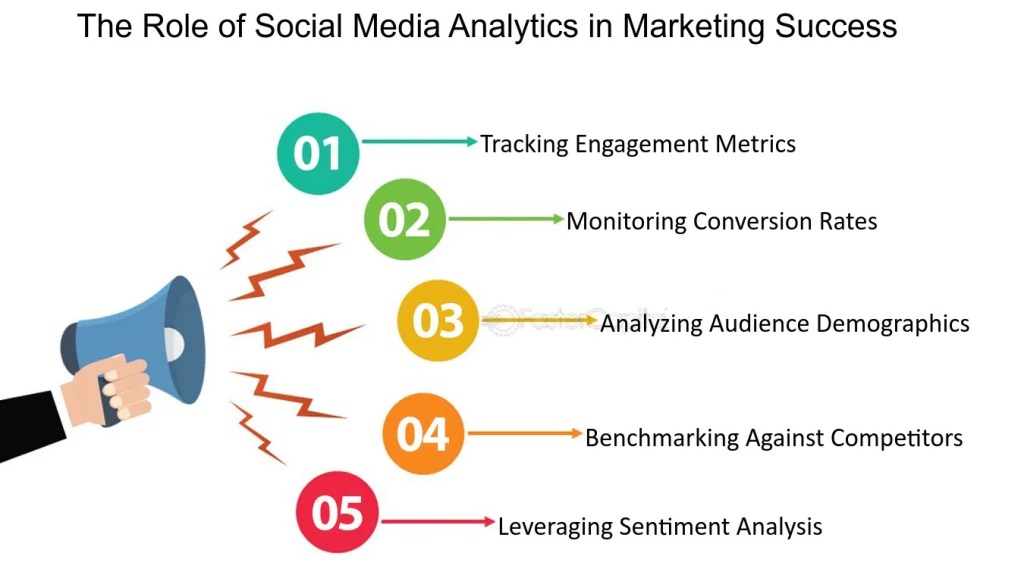
In today’s digital landscape, social media has become an indispensable tool for businesses of all sizes. It not only serves as a platform for engaging with customers and building brand awareness but also provides a wealth of data that can be leveraged to inform strategic decision-making. [1] By harnessing the power of social media analytics, organizations can gain valuable insights into their target audience, optimize their marketing efforts, and ultimately drive sustainable growth.
This comprehensive guide will delve into the world of social media analytics, exploring how to effectively collect, analyze, and apply these insights to develop a winning strategy. From identifying key performance indicators (KPIs) to implementing data-driven tactics, we’ll equip you with the knowledge and tools necessary to transform your social media presence into a strategic asset.
Understanding Social Media Analytics
Social media analytics refers to the process of collecting, measuring, and interpreting data from various social media platforms to gain insights into user behavior, content performance, and overall marketing effectiveness. [2] This data-driven approach allows businesses to make informed decisions, optimize their social media strategies, and achieve their desired objectives.
Identifying Key Performance Indicators (KPIs)
The first step in leveraging social media analytics is to identify the key performance indicators (KPIs) that align with your business goals. These metrics serve as the foundation for measuring the success of your social media efforts and can include:
- Engagement Metrics: Likes, comments, shares, and click-through rates (CTR) provide insights into how your audience is interacting with your content.
- Audience Metrics: Follower growth, demographic data, and audience interests help you understand your target audience and tailor your content accordingly.
- Reach and Impressions: The number of people who have seen your content, both organically and through paid promotion, indicates the overall visibility of your brand.
- Conversion Metrics: Tracking website traffic, lead generation, and sales conversions from social media can help you measure the direct impact on your business objectives.
By clearly defining your KPIs, you can ensure that your social media analytics efforts are aligned with your overarching business strategy. [3]
Collecting and Organizing Data
The next step in the process is to collect and organize the relevant data from your social media platforms. This can be done through a combination of native platform analytics tools, third-party analytics platforms, and custom data tracking solutions.
- Native Platform Analytics: Most social media platforms, such as Facebook, Twitter, Instagram, and LinkedIn, provide built-in analytics tools that allow you to access a wealth of data about your account and content performance.
- Third-Party Analytics Platforms: Tools like Google Analytics, Hootsuite, Sprout Social, and Agorapulse offer comprehensive social media analytics capabilities, often integrating data from multiple platforms into a single dashboard.
- Custom Data Tracking: Depending on your specific needs, you may want to implement custom tracking solutions, such as UTM parameters or pixel-based tracking, to capture additional data points that are not available through native or third-party tools.
Regardless of the approach you choose, it’s essential to establish a consistent data collection and organization process to ensure the accuracy and reliability of your insights.
Analyzing and Interpreting Data
Once you have collected the relevant data, the next step is to analyze and interpret the information to uncover meaningful insights. This process involves:
- Identifying Trends and Patterns: Examine your data over time to identify trends, patterns, and changes in your social media performance. This can help you understand what content resonates with your audience, when they are most active, and how your efforts are impacting your overall business objectives.
- Segmenting and Targeting: Analyze your audience data to segment your followers based on demographics, interests, and behaviors. This information can be used to create more personalized and targeted content, as well as to identify new opportunities for growth.
- Benchmarking and Competitive Analysis: Compare your social media performance to industry benchmarks and your competitors to identify areas for improvement and opportunities to gain a competitive edge.
- Uncovering Insights and Opportunities: Synthesize the data to uncover insights that can inform your strategic decision-making, such as identifying new content themes, optimizing your posting schedule, or exploring new social media platforms to reach your target audience.
By thoroughly analyzing and interpreting your social media data, you can gain a deeper understanding of your audience, the effectiveness of your content, and the overall impact of your social media efforts on your business objectives.
Developing a Data-Driven Social Media Strategy
Armed with the insights gained from your social media analytics, you can now begin to develop a data-driven social media strategy that aligns with your overall business goals. This process involves several key steps:
Defining Your Objectives and KPIs
Start by revisiting your business objectives and aligning your social media goals accordingly. This could include increasing brand awareness, driving website traffic, generating leads, or boosting sales. Once you have defined your objectives, identify the specific KPIs that will help you measure the success of your efforts.
Audience Segmentation and Targeting
Leverage your audience data to segment your followers based on demographics, interests, and behaviors. This will allow you to create more personalized and targeted content, as well as to identify new opportunities for growth and expansion.
Content Strategy and Optimization
Analyze your past content performance to determine which types of content, formats, and topics resonate best with your audience. Use this information to develop a content strategy that focuses on creating high-quality, engaging, and valuable content for your target audience.
Additionally, optimize your content by experimenting with different posting schedules, hashtags, and calls-to-action to maximize engagement and reach.
Paid Social Media Advertising
Incorporate paid social media advertising into your strategy to amplify your organic efforts and reach a wider audience. Utilize the targeting and optimization capabilities of social media platforms to create highly targeted and effective ad campaigns.
Influencer and Collaboration Strategies
Leverage influencer marketing and strategic collaborations to expand your reach and tap into new audiences. Analyze your data to identify relevant influencers and potential partners that align with your brand and can help you achieve your social media objectives.
Continuous Monitoring and Optimization
Regularly monitor your social media performance, analyze the data, and make adjustments to your strategy as needed. This iterative process will allow you to continuously optimize your efforts, respond to changing market conditions, and achieve your desired outcomes.
Implementing Data-Driven Tactics
To bring your data-driven social media strategy to life, it’s essential to implement a range of tactics that leverage the insights you’ve gained from your analytics. Here are some key tactics to consider:
Content Optimization
Use your data to inform the creation and distribution of your social media content. This includes:
- Identifying Top-Performing Content: Analyze which types of content (e.g., images, videos, text-based posts) and topics resonate most with your audience, and create more of that content.
- Optimizing Posting Schedules: Determine the best times and days to post based on when your audience is most active and engaged.
- Leveraging Hashtags and Mentions: Utilize relevant hashtags and mentions to increase the discoverability of your content and reach new audiences.
- Experimenting with Content Formats: Test different content formats, such as short-form videos, carousels, or interactive polls, to see what resonates best with your audience.
Audience Targeting and Segmentation
Leverage your audience data to create highly targeted and personalized content, campaigns, and advertising. This may include:
- Developing Buyer Personas: Use audience data to create detailed buyer personas that inform your content, messaging, and targeting strategies.
- Implementing Targeted Advertising: Utilize the advanced targeting capabilities of social media platforms to reach specific segments of your audience with tailored ad campaigns.
- Personalized Content Delivery: Deliver personalized content recommendations and experiences based on individual user preferences and behaviors.
Influencer and Collaboration Strategies
Analyze your data to identify relevant influencers and potential partners that can help you reach new audiences and amplify your brand’s message. This may involve:
- Influencer Identification: Use data-driven tools to identify influential individuals within your industry or target market who align with your brand and can help you reach new audiences.
- Collaborative Content Creation: Partner with influencers or complementary brands to create co-branded content that taps into each other’s audiences.
- Influencer-Driven Campaigns: Leverage influencer marketing campaigns to drive awareness, engagement, and conversions among your target audience.
Social Listening and Reputation Management
Monitor and respond to conversations about your brand, products, and industry on social media. This can help you:
- Identify Emerging Trends: Stay up-to-date on the latest trends, topics, and pain points within your industry to inform your content and product development strategies.
- Manage Online Reputation: Quickly address and resolve any negative sentiment or feedback, and use positive mentions to amplify your brand’s reputation.
- Engage with Your Audience: Respond to comments, questions, and mentions to build stronger relationships with your followers and demonstrate your commitment to customer service.
Measurement and Reporting
Continuously track, analyze, and report on your social media performance to measure the impact of your efforts and identify areas for improvement. This may include:
- Dashboarding and Reporting: Create custom dashboards and reports that provide a clear, data-driven view of your social media performance and its alignment with your business objectives.
- Benchmarking and Competitive Analysis: Compare your social media metrics to industry benchmarks and your competitors to identify opportunities for growth and optimization.
- Iterative Optimization: Use your data to make informed decisions about content, targeting, and campaign adjustments, and continuously refine your social media strategy.
By implementing these data-driven tactics, you can transform your social media presence into a strategic asset that drives measurable business results.
Case Studies: Leveraging Social Media Analytics for Success
To illustrate the power of social media analytics in driving strategic success, let’s explore a few real-world case studies:
Case Study 1: Increasing Brand Awareness and Engagement for a Luxury Fashion Brand
A luxury fashion brand wanted to increase its brand awareness and engagement on social media. By analyzing their audience data, they discovered that their target customers were primarily active on Instagram and were particularly interested in lifestyle and aspirational content.
The brand then used this insight to develop a content strategy focused on creating visually stunning, lifestyle-oriented content that showcased their products in a natural, aspirational setting. They also leveraged Instagram’s Stories and Reels features to create more engaging, short-form content that resonated with their audience.
Additionally, the brand identified key influencers within their industry and collaborated with them on content creation and promotion, tapping into their established audiences.
The results were impressive: the brand saw a 35% increase in Instagram followers, a 42% increase in engagement rates, and a 28% uplift in website traffic from social media. This data-driven approach allowed the brand to effectively reach and engage its target audience, ultimately driving increased brand awareness and consideration.
Case Study 2: Driving Lead Generation for a B2B Software Company
A B2B software company wanted to use social media to generate high-quality leads for its sales team. By analyzing their social media data, they discovered that their target audience was most active on LinkedIn and was particularly interested in content related to industry trends, best practices, and thought leadership.
The company then developed a content strategy focused on creating valuable, educational content that addressed the pain points and challenges of their target audience. They also leveraged LinkedIn’s targeting and advertising capabilities to reach their ideal customers with tailored content and offers.
To measure the success of their efforts, the company tracked key metrics such as lead generation, website traffic, and sales pipeline growth. They found that their data-driven social media strategy resulted in a 27% increase in qualified leads, a 19% boost in website traffic, and a 32% uplift in sales pipeline value.
By using social media analytics to inform their strategy and tactics, the B2B software company was able to effectively reach and engage their target audience, ultimately driving measurable business results.
Case Study 3: Optimizing Social Media Advertising for an Ecommerce Brand
An ecommerce brand wanted to leverage social media advertising to drive sales and revenue growth. By analyzing their social media data, they discovered that their target audience was highly active on Facebook and Instagram, and was particularly interested in product-focused content and promotional offers.
The brand then used this insight to develop a targeted social media advertising strategy, focusing on creating visually appealing product ads and leveraging Facebook’s and Instagram’s advanced targeting capabilities to reach their ideal customers.
To optimize their advertising efforts, the brand continuously monitored their campaign performance, analyzing metrics such as click-through rate, conversion rate, and return on ad spend (ROAS). They used these insights to make real-time adjustments to their ad creative, targeting, and bidding strategies, ensuring that their campaigns were as effective and efficient as possible.
The results were impressive: the brand saw a 42% increase in online sales, a 35% improvement in ROAS, and a 28% reduction in customer acquisition costs. By using social media analytics to inform their advertising strategy and tactics, the ecommerce brand was able to effectively reach and convert their target audience, driving significant business growth.
These case studies demonstrate the power of social media analytics in driving strategic success across a range of industries and business objectives. By leveraging data-driven insights, organizations can optimize their social media presence, reach their target audience more effectively, and achieve measurable business results.
Conclusion
In today’s digital landscape, social media has become an indispensable tool for businesses of all sizes. By harnessing the power of social media analytics, organizations can gain valuable insights into their target audience, optimize their marketing efforts, and ultimately drive sustainable growth.
This comprehensive guide has explored the key steps in leveraging social media analytics to develop a winning strategy, from identifying KPIs and collecting data to analyzing insights and implementing data-driven tactics. By following these best practices, you can transform your social media presence into a strategic asset that aligns with your overall business objectives and delivers measurable results.
Remember, the journey of leveraging social media analytics is an ongoing process of continuous learning and optimization. Stay agile, responsive to market changes, and committed to data-driven decision-making, and you’ll be well on your way to social media success.
Learn more:
- 7 Ways to Use Social Media for SEO in 2024 | Sprinklr
- Social Media SEO: 10 Social Media Strategies to Boost SEO
- Social Media SEO: How To Incorporate Social Media Into SEO Strategy
Share:👇
Subscribe to get more of such amazing content 👇
Related post
- How to Start a Print on Demand Business: A Comprehensive Guide
 Share:👇 Starting a print on demand (POD) business can be an exciting and profitable venture, especially in today’s era of e-commerce. Whether you’re an artist looking to monetize your designs or an entrepreneur exploring new business avenues, the POD model offers a low-risk, scalable method of selling custom products without the need for inventory or… Read more: How to Start a Print on Demand Business: A Comprehensive Guide
 - Mistakes Most Young Entrepreneurs Make When Starting an Online Business
 Share:👇 Starting an online business can be an exciting and rewarding venture for young entrepreneurs, but it also comes with its fair share of challenges. Many young entrepreneurs make common mistakes that can hinder their success and lead to the downfall of their businesses. In this comprehensive guide, we will explore the most prevalent mistakes… Read more: Mistakes Most Young Entrepreneurs Make When Starting an Online Business
 - Starting a Dropshipping Website on Spocket: What You Need to Know
 Share:👇 Introduction In the ever-evolving world of e-commerce, dropshipping has emerged as a game-changing business model that has revolutionized the way entrepreneurs approach online retail. Spocket, a leading dropshipping platform, has become a popular choice for those looking to venture into this lucrative space. [1] This comprehensive guide will delve into the intricacies of starting… Read more: Starting a Dropshipping Website on Spocket: What You Need to Know
 - The 10 Best Dropshipping Websites for Ecommerce Success in 2024
 Share:👇 Introduction In the ever-evolving world of ecommerce, dropshipping has emerged as a game-changing business model that allows entrepreneurs to start and scale online stores without the hassle of managing inventory. By partnering with reliable suppliers, dropshipping enables you to offer a wide range of products to your customers while minimizing upfront costs and overhead.… Read more: The 10 Best Dropshipping Websites for Ecommerce Success in 2024
 - The Ultimate Guide to the Best Affiliate Marketing Websites
 Share:👇 Introduction Affiliate marketing has become one of the most popular ways to earn passive income online. With the right strategies and tools, you can turn your website into a revenue-generating machine. In this guide, we’ll explore the best affiliate marketing websites, provide in-depth reviews, and share tips on how to maximize your earnings. What… Read more: The Ultimate Guide to the Best Affiliate Marketing Websites
 - Mastering Long-Form Content for SEO in 2024 and Beyond
 Share:👇 In the ever-evolving world of search engine optimization (SEO), the importance of long-form content has become increasingly apparent. As Google and other search engines continue to prioritize high-quality, in-depth information, crafting compelling long-form content has become a crucial strategy for businesses and content creators looking to rank higher in search results and engage their… Read more: Mastering Long-Form Content for SEO in 2024 and Beyond
 - The Rise of AI in SEO: Navigating the Changing Landscape of Search Engine Optimization in 2024 and Beyond
 Share:👇 Introduction: The Evolving Role of AI in SEO As we look ahead to 2024 and beyond, the world of search engine optimization (SEO) is undergoing a profound transformation, driven largely by the rapid advancements in artificial intelligence (AI) technology. The impact of AI on SEO is undeniable, presenting both opportunities and challenges for marketers,… Read more: The Rise of AI in SEO: Navigating the Changing Landscape of Search Engine Optimization in 2024 and Beyond
 - The Transformative Role of Blockchain in Digital Marketing
 Share:👇 Introduction In the ever-evolving landscape of digital marketing, the emergence of blockchain technology has sparked a revolution, redefining the way businesses engage with their customers and approach their marketing strategies. As the digital world continues to grapple with issues of transparency, data security, and trust, blockchain has emerged as a game-changing solution, offering a… Read more: The Transformative Role of Blockchain in Digital Marketing
 - Unlocking the Power of Facebook Ads: A Comprehensive Guide to Maximizing ROI
 Share:👇 In the ever-evolving digital landscape, Facebook ads have emerged as a powerful tool for businesses of all sizes to reach and engage their target audience. With over 2.9 billion monthly active users, Facebook provides unparalleled access to a vast and diverse customer base, making it an essential component of any comprehensive marketing strategy. However,… Read more: Unlocking the Power of Facebook Ads: A Comprehensive Guide to Maximizing ROI
 - The Future of Affiliate Marketing: Navigating the Evolving Landscape
 Share:👇 Introduction: The Affiliate Marketing Landscape in Flux In the ever-changing world of digital marketing, affiliate marketing has emerged as a powerful and lucrative strategy for businesses and individuals alike. As the industry continues to evolve, it’s crucial for both seasoned and aspiring affiliate marketers to stay ahead of the curve and understand the trends… Read more: The Future of Affiliate Marketing: Navigating the Evolving Landscape
 - How to Use Pinterest for Business: A Comprehensive Guide
 Share:👇 Introduction In the ever-evolving landscape of digital marketing, businesses are constantly seeking new and innovative ways to reach their target audience. One platform that has emerged as a powerful tool for businesses is Pinterest. With its visually-driven nature and growing user base, Pinterest offers a unique opportunity for businesses to showcase their products, services,… Read more: How to Use Pinterest for Business: A Comprehensive Guide
 - The Vital Role of Customer Experience in Digital Marketing
 Share:👇 In the ever-evolving landscape of digital marketing, the importance of customer experience (CX) cannot be overstated. As businesses strive to stand out in an increasingly crowded online space, delivering a seamless, engaging, and personalized customer journey has become a critical differentiator. The digital age has empowered consumers with an abundance of choices and information… Read more: The Vital Role of Customer Experience in Digital Marketing



 Hubgenus