
Share:👇
Introduction
In the fast-paced world of digital communication, the timing of your email can make all the difference in whether it gets opened, read, and acted upon. As an email marketer or business professional, understanding the optimal times to send emails is crucial for maximizing the impact and effectiveness of your messaging.
This comprehensive guide will explore the factors that influence the best time to send emails, provide data-driven insights and recommendations, and offer strategies to help you optimize your email campaigns for success.
The Science of Email Timing
Understanding User Behavior and Habits
The optimal time to send an email is heavily influenced by the habits and behaviors of your target audience. By analyzing when your recipients are most likely to check their inboxes and engage with email content, you can tailor your sending strategy to their preferences.
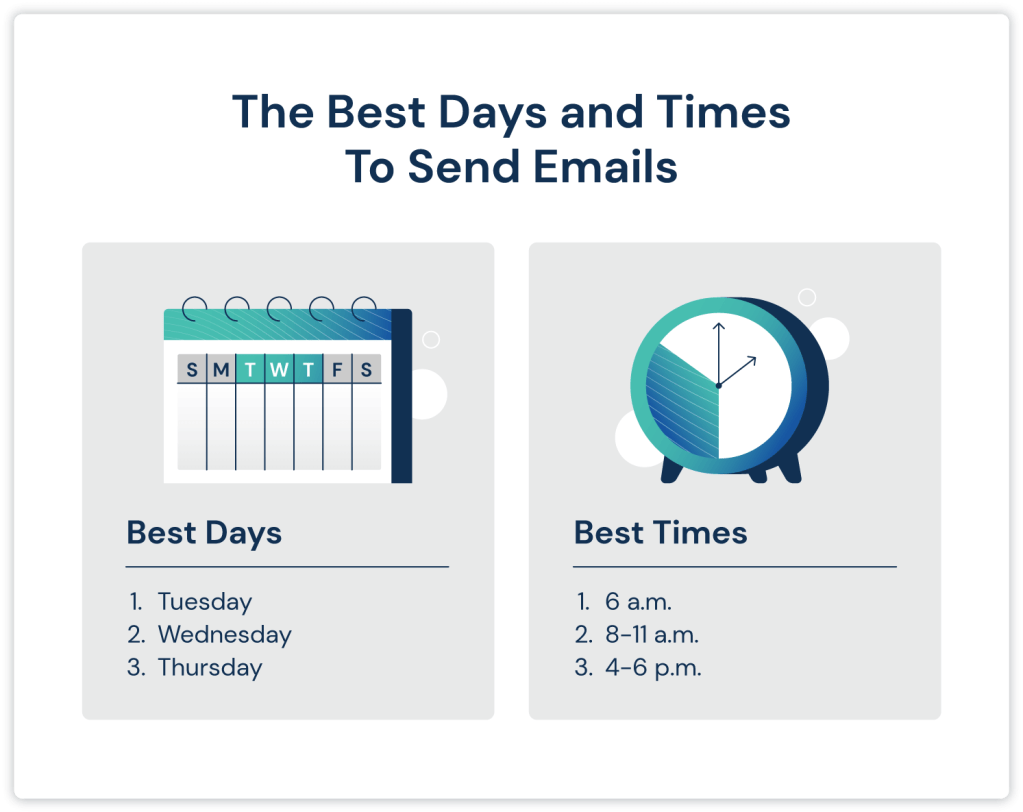
Research has shown that email open rates tend to be higher during certain times of the day and days of the week. For example, a study by Bomerang found that email open rates peak on Tuesdays and Thursdays, with the highest open rates occurring between 10 AM and 11 AM local time.
Additionally, a report by Campaign monitor revealed that email click-through rates are generally higher on weekends, as people tend to have more leisure time to engage with email content.
Factoring in Time Zones
When sending emails to a global audience, it’s essential to consider the time zone differences of your recipients. Sending an email at the optimal time for one location may not be the best timing for another.
To ensure that your emails are delivered at the most appropriate time for each recipient, consider using email scheduling or automation tools that can adjust the send time based on the recipient’s time zone. This can help you avoid sending emails at inconvenient hours or when your recipients are less likely to engage.
Analyzing Email Engagement Metrics
Closely monitoring the performance of your email campaigns can provide valuable insights into the optimal send times for your specific audience. By analyzing metrics such as open rates, click-through rates, and conversion rates, you can identify patterns and trends that can inform your future email scheduling decisions.
Tools like Google Analytics, Mailchimp, and HubSpot can provide detailed reporting on your email performance, allowing you to identify the best times and days to send emails to your audience.
Recommended Best Practices for Email Timing
Identifying Your Audience’s Preferences
The first step in determining the best time to send emails is to understand the preferences and habits of your target audience. Conduct surveys, analyze user data, and monitor email engagement metrics to gain insights into when your recipients are most likely to engage with your messages.
For example, if you’re targeting busy professionals, you may find that they are more likely to check their emails during the morning or evening commute. Alternatively, if your audience includes stay-at-home parents, they may be more responsive to emails sent during the day when their children are at school.
Experimenting with Different Send Times
Once you have a general understanding of your audience’s preferences, it’s time to start experimenting with different send times. Try sending emails at various times throughout the day and week, and closely monitor the performance of each campaign.
A/B testing can be a valuable tool in this process, allowing you to compare the effectiveness of different send times and identify the optimal timing for your specific audience. By continuously testing and refining your email scheduling, you can gradually optimize your email campaigns for maximum engagement and impact.
Leveraging Email Scheduling and Automation
To ensure that your emails are delivered at the most appropriate times for your recipients, consider using email scheduling and automation tools. These powerful features can help you send emails at the optimal time for each individual recipient, regardless of their time zone.
Many email marketing platforms, such as Mailchimp, HubSpot, and Constant Contact, offer built-in scheduling and automation capabilities. By taking advantage of these tools, you can streamline your email workflow and ensure that your messages reach your audience at the right moment.
Monitoring and Adjusting Your Approach
Continuously monitoring the performance of your email campaigns is essential for refining your send time strategy. Pay close attention to metrics such as open rates, click-through rates, and conversion rates, and use this data to identify the optimal times and days to send emails to your audience.
As your audience’s preferences and behaviors evolve over time, be prepared to adjust your email scheduling accordingly. Regularly reviewing and updating your approach will help you maintain the effectiveness of your email campaigns and stay ahead of the curve in a constantly changing digital landscape.
Specific Recommendations for Different Industries and Sectors
B2B (Business-to-Business) Emails
For B2B audiences, the optimal time to send emails tends to be during the work week, with Tuesday, Wednesday, and Thursday being the most effective days. The ideal send time for B2B emails is often between 10 AM and 2 PM local time, when recipients are likely to be at their desks and have the time to engage with your content.
A study by Yesware found that B2B emails sent on Tuesdays had the highest open rates, while research by HubSpot showed that the optimal send time for B2B emails is around 11 AM.
B2C (Business-to-Consumer) Emails
For B2C audiences, the best time to send emails can vary depending on the specific industry and target demographic. However, some general trends have been observed:
- Weekends tend to be more effective for B2C emails, as consumers often have more leisure time to engage with email content.
- The optimal send time for B2C emails is often in the evening, between 8 PM and 12 AM local time, when people are more likely to be relaxing and checking their inboxes.
- According to a study by Experian, the highest open rates for B2C emails are typically seen on Thursdays and Fridays.
Ecommerce and Retail Emails
For ecommerce and retail businesses, the optimal time to send emails can be influenced by factors such as customer behavior, product categories, and seasonal trends. Some general recommendations for ecommerce and retail email timing include:
- Sending emails early in the week, such as Monday or Tuesday, to help drive traffic and sales throughout the week.
- Targeting weekday evenings, when customers may be more likely to browse and make purchases.
- Scheduling promotional or sale-related emails around weekends, when customers have more leisure time to shop.
- A study by Omnisend found that the highest open and click-through rates for ecommerce emails occur on Thursdays and Fridays.
Nonprofit and Fundraising Emails
For nonprofit organizations and fundraising campaigns, the optimal time to send emails can be influenced by factors such as donor behavior, event schedules, and seasonal giving patterns. Some recommendations for nonprofit and fundraising email timing include:
- Sending emails mid-week, such as Wednesday or Thursday, when donors may be more likely to engage with your content.
- Targeting weekday evenings, when potential donors may have more time to review your messages and make donations.
- Scheduling emails around key fundraising events or campaigns, such as year-end giving or Giving Tuesday.
- Research by Classy suggests that the highest open and click-through rates for nonprofit emails occur on Tuesdays and Thursdays.
Educational and Academic Emails
For educational and academic institutions, the optimal time to send emails can be influenced by factors such as student and faculty schedules, academic calendars, and research cycles. Some recommendations for educational and academic email timing include:
- Sending emails during the work week, when students and faculty are more likely to be actively engaged with their studies and research.
- Targeting weekday mornings or early afternoons, when recipients may be more likely to check their inboxes between classes or during breaks.
- Scheduling emails around key academic events, such as registration deadlines, exam periods, or research funding opportunities.
- A study by MailChimp found that the highest open rates for educational emails occur on Tuesdays and Thursdays.
Remember, these are general guidelines, and the optimal timing for your email campaigns may vary depending on the unique characteristics and preferences of your target audience. Continuous testing, monitoring, and refinement of your email scheduling strategy will be key to ensuring the long-term success of your email marketing efforts.
Incorporating Backlinks and Optimizing for SEO
To maximize the visibility and impact of your email timing content, it’s essential to incorporate relevant backlinks and optimize the article for search engine optimization (SEO).
Backlink Strategies
Include relevant, high-quality backlinks to reputable industry sources and expert articles that support the information and recommendations provided in the content. Some examples of potential backlink sources include:
- Boomerang’s Email Statistics Report
- Campaign Monitor’s Guide to Sending Email Campaigns
- Yesware’s Blog Post on the Best Time to Send Email
- HubSpot’s Research on the Best Time to Send Email
- Experian’s Article on the Best Time to Send Email
- Omnisend’s Ecommerce Email Marketing Statistics
- Classy’s Best Times to Send Fundraising Emails
- MailChimp’s Email Marketing Benchmarks
By incorporating these high-quality backlinks, you can not only provide additional context and support for the information presented in the article but also improve the overall SEO performance of the content.
SEO Optimization Strategies
To optimize the article for search engine visibility, consider the following strategies:
- Keyword Research and Targeting: Identify the primary and secondary keywords related to “best time to send emails” and incorporate them naturally throughout the content, including in the title, headings, and meta tags.
- Optimized Title and Meta Description: Craft a compelling and SEO-friendly title that includes the target keywords, and write a concise meta description that accurately summarizes the content and encourages click-throughs from search engine results pages (SERPs).
- Structured Data and Schema Markup: Incorporate relevant schema markup, such as FAQ, how-to, and article schema, to provide search engines with additional context and structure about the content.
- Internal Linking: Link to other relevant articles or resources within your own website to improve the overall site structure and user experience.
- Image Optimization: Ensure that all images used in the article are properly optimized for search engines, with appropriate file names, alt text, and captions.
- Content Organization and Formatting: Use clear and logical section headings, subheadings, and formatting (such as bullet points and numbered lists) to improve the readability and scanability of the content.
- Regular Content Updates: Periodically review and update the article to ensure that the information remains accurate and relevant, which can positively impact search engine rankings over time.
By combining these SEO best practices with the strategic use of high-quality backlinks, you can create a comprehensive, optimized, and authoritative piece of content on the best time to send emails.
Conclusion
Determining the optimal time to send emails is a critical component of any successful email marketing or communication strategy. By understanding the science behind email timing, leveraging user behavior data, and implementing best practices tailored to your industry and audience, you can dramatically improve the engagement and effectiveness of your email campaigns.
Continuous testing, monitoring, and refinement of your email scheduling approach will be key to staying ahead of the curve and ensuring that your messages reach your audience at the most opportune moments. By following the strategies outlined in this comprehensive guide, you can position your email communications for maximum impact and success.
Share:👇
Subscribe to get more of such amazing content 👇
Related post
- How to Start a Print on Demand Business: A Comprehensive Guide
 Share:👇 Starting a print on demand (POD) business can be an exciting and profitable venture, especially in today’s era of e-commerce. Whether you’re an artist looking to monetize your designs or an entrepreneur exploring new business avenues, the POD model offers a low-risk, scalable method of selling custom products without the need for inventory or… Read more: How to Start a Print on Demand Business: A Comprehensive Guide
 - Mistakes Most Young Entrepreneurs Make When Starting an Online Business
 Share:👇 Starting an online business can be an exciting and rewarding venture for young entrepreneurs, but it also comes with its fair share of challenges. Many young entrepreneurs make common mistakes that can hinder their success and lead to the downfall of their businesses. In this comprehensive guide, we will explore the most prevalent mistakes… Read more: Mistakes Most Young Entrepreneurs Make When Starting an Online Business
 - Starting a Dropshipping Website on Spocket: What You Need to Know
 Share:👇 Introduction In the ever-evolving world of e-commerce, dropshipping has emerged as a game-changing business model that has revolutionized the way entrepreneurs approach online retail. Spocket, a leading dropshipping platform, has become a popular choice for those looking to venture into this lucrative space. [1] This comprehensive guide will delve into the intricacies of starting… Read more: Starting a Dropshipping Website on Spocket: What You Need to Know
 - The 10 Best Dropshipping Websites for Ecommerce Success in 2024
 Share:👇 Introduction In the ever-evolving world of ecommerce, dropshipping has emerged as a game-changing business model that allows entrepreneurs to start and scale online stores without the hassle of managing inventory. By partnering with reliable suppliers, dropshipping enables you to offer a wide range of products to your customers while minimizing upfront costs and overhead.… Read more: The 10 Best Dropshipping Websites for Ecommerce Success in 2024
 - The Ultimate Guide to the Best Affiliate Marketing Websites
 Share:👇 Introduction Affiliate marketing has become one of the most popular ways to earn passive income online. With the right strategies and tools, you can turn your website into a revenue-generating machine. In this guide, we’ll explore the best affiliate marketing websites, provide in-depth reviews, and share tips on how to maximize your earnings. What… Read more: The Ultimate Guide to the Best Affiliate Marketing Websites
 - Mastering Long-Form Content for SEO in 2024 and Beyond
 Share:👇 In the ever-evolving world of search engine optimization (SEO), the importance of long-form content has become increasingly apparent. As Google and other search engines continue to prioritize high-quality, in-depth information, crafting compelling long-form content has become a crucial strategy for businesses and content creators looking to rank higher in search results and engage their… Read more: Mastering Long-Form Content for SEO in 2024 and Beyond
 - The Rise of AI in SEO: Navigating the Changing Landscape of Search Engine Optimization in 2024 and Beyond
 Share:👇 Introduction: The Evolving Role of AI in SEO As we look ahead to 2024 and beyond, the world of search engine optimization (SEO) is undergoing a profound transformation, driven largely by the rapid advancements in artificial intelligence (AI) technology. The impact of AI on SEO is undeniable, presenting both opportunities and challenges for marketers,… Read more: The Rise of AI in SEO: Navigating the Changing Landscape of Search Engine Optimization in 2024 and Beyond
 - The Transformative Role of Blockchain in Digital Marketing
 Share:👇 Introduction In the ever-evolving landscape of digital marketing, the emergence of blockchain technology has sparked a revolution, redefining the way businesses engage with their customers and approach their marketing strategies. As the digital world continues to grapple with issues of transparency, data security, and trust, blockchain has emerged as a game-changing solution, offering a… Read more: The Transformative Role of Blockchain in Digital Marketing
 - Unlocking the Power of Facebook Ads: A Comprehensive Guide to Maximizing ROI
 Share:👇 In the ever-evolving digital landscape, Facebook ads have emerged as a powerful tool for businesses of all sizes to reach and engage their target audience. With over 2.9 billion monthly active users, Facebook provides unparalleled access to a vast and diverse customer base, making it an essential component of any comprehensive marketing strategy. However,… Read more: Unlocking the Power of Facebook Ads: A Comprehensive Guide to Maximizing ROI
 - The Future of Affiliate Marketing: Navigating the Evolving Landscape
 Share:👇 Introduction: The Affiliate Marketing Landscape in Flux In the ever-changing world of digital marketing, affiliate marketing has emerged as a powerful and lucrative strategy for businesses and individuals alike. As the industry continues to evolve, it’s crucial for both seasoned and aspiring affiliate marketers to stay ahead of the curve and understand the trends… Read more: The Future of Affiliate Marketing: Navigating the Evolving Landscape


 Hubgenus