
Share:👇
Introduction
In the ever-evolving world of ecommerce, one of the most crucial aspects of customer engagement and retention is email marketing. A recent study by Constant Contact found that email marketing has an average ROI of $42 for every $1 spent, making it a highly effective tool for ecommerce businesses. However, finding the right email frequency can be a challenging task, as too many emails can lead to unsubscribes and disengaged customers, while too few can result in missed opportunities to connect with your audience.
In this comprehensive guide, we’ll explore the ideal email frequency for ecommerce businesses, taking into account factors such as industry best practices, customer preferences, and the unique needs of your business. By the end of this article, you’ll have a better understanding of how to strike the perfect balance and optimize your email marketing strategy for maximum impact.
Understanding Email Frequency
Email frequency refers to the number of emails you send to your subscribers over a specific period, such as daily, weekly, or monthly. The ideal frequency can vary depending on a variety of factors, including your industry, the nature of your business, and the preferences of your target audience.
Industry Benchmarks
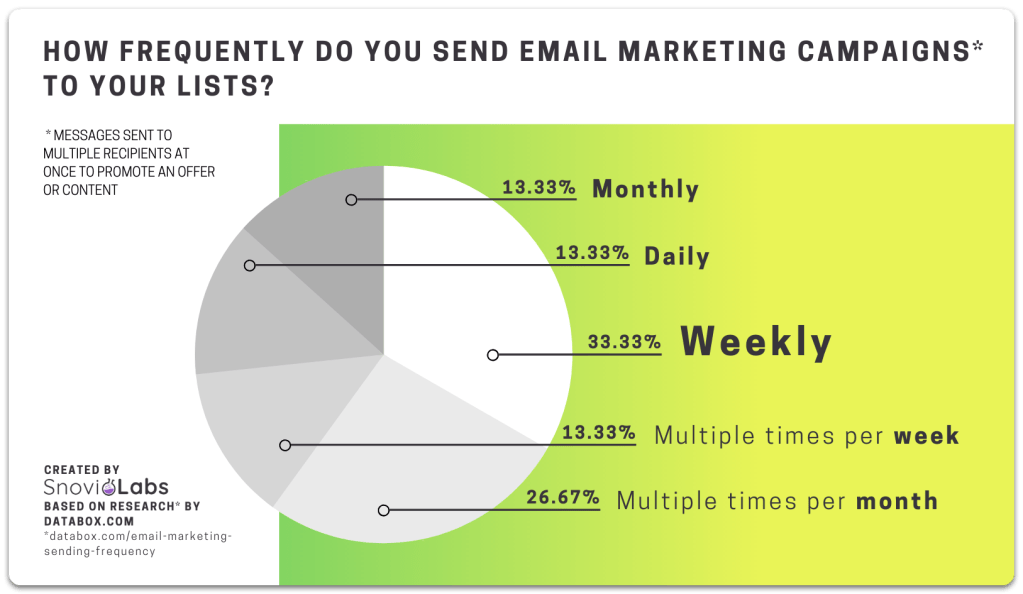
According to a report by Constant Contact, the average email frequency for ecommerce businesses is 1-2 emails per week. This range is generally considered the sweet spot, as it allows you to maintain regular communication with your subscribers without overwhelming them.
However, it’s important to note that these are just industry averages, and your optimal email frequency may differ depending on your unique circumstances. For example, a study by Omnisend found that fashion and apparel brands tend to send more frequent emails, with an average of 3-4 per week.
Customer Preferences
In addition to industry benchmarks, it’s crucial to consider the preferences of your target audience. According to a survey by Litmus, 49% of consumers prefer to receive emails from brands once a week, while 32% prefer to receive them once a month.
It’s important to keep in mind that individual customer preferences can vary, and it’s often a good idea to provide subscribers with the option to adjust their email frequency preferences. This can help you maintain a positive relationship with your audience and reduce the risk of unsubscribes.
Business Considerations
When determining the ideal email frequency for your ecommerce business, you should also consider factors such as your product or service, the seasonality of your industry, and your overall marketing strategy.
For example, if you’re running a seasonal ecommerce business, you may need to adjust your email frequency to coincide with peak shopping periods. A study by Klaviyo found that ecommerce businesses often see a significant increase in email engagement during the holiday season, so you may want to increase your email frequency during this time to capitalize on the heightened interest.
Additionally, your overall marketing strategy may also influence your email frequency. If you’re heavily relying on email to drive sales and engage customers, you may want to send more frequent emails compared to a business that uses email as just one component of a larger multichannel marketing approach.
Strategies for Determining Ideal Email Frequency
Now that we’ve explored the factors that influence email frequency, let’s dive into some strategies for determining the ideal frequency for your ecommerce business.
Start with Industry Benchmarks
As mentioned earlier, the average email frequency for ecommerce businesses is 1-2 emails per week. This can serve as a good starting point for your email marketing strategy. According to a report by Constant Contact, businesses that send 1-4 emails per month see the highest engagement and open rates.
However, it’s important to remember that these are just industry averages, and your optimal email frequency may differ. Use these benchmarks as a starting point and then adjust your strategy based on your own customer data and feedback.
Segment Your Audience
Another effective strategy for determining the ideal email frequency is to segment your audience based on their preferences and behavior. A study by Litmus found that 49% of consumers prefer to receive emails from brands once a week, while 32% prefer to receive them once a month. By segmenting your audience, you can tailor your email frequency to the preferences of each group.
For example, you could create a segment for your most engaged subscribers and send them more frequent emails, while sending less frequent emails to your less engaged subscribers. This can help you strike the right balance and maintain a positive relationship with all of your subscribers.
A/B Test and Iterate
One of the best ways to determine the ideal email frequency for your ecommerce business is to conduct A/B tests. This involves sending different email frequencies to randomized segments of your audience and monitoring the results to see which performs better.
According to a study by Omnisend, ecommerce brands that A/B test their email frequency see a 20% higher open rate and a 30% higher click-through rate compared to those that don’t. By constantly testing and iterating on your email frequency, you can find the sweet spot that works best for your business and your customers.
Consider Seasonality and Promotions
As mentioned earlier, the ideal email frequency for your ecommerce business may vary depending on the season or the timing of your promotions. A study by Klaviyo found that ecommerce businesses often see a significant increase in email engagement during the holiday season, so you may want to increase your email frequency during this time to capitalize on the heightened interest.
Similarly, if you’re running a limited-time promotion or sale, you may want to increase your email frequency to ensure that your customers are aware of the offer and have the opportunity to take advantage of it.
Provide Subscribers with Frequency Options
Finally, it’s a good idea to give your subscribers the option to choose their preferred email frequency. This can help you maintain a positive relationship with your audience and reduce the risk of unsubscribes.
According to a study by Litmus, 49% of consumers prefer to receive emails from brands once a week, while 32% prefer to receive them once a month. By offering your subscribers the ability to adjust their email preferences, you can cater to the diverse needs of your audience and keep them engaged with your brand.
Email Frequency Best Practices
In addition to the strategies outlined above, there are several best practices to keep in mind when determining the ideal email frequency for your ecommerce business.
Avoid Overwhelming Your Subscribers
One of the most important things to remember is to avoid overwhelming your subscribers with too many emails. According to a study by Constant Contact, businesses that send 1-4 emails per month see the highest engagement and open rates.
If you bombard your subscribers with too many emails, they may become overwhelmed and start to tune out your messages. This can lead to a decrease in engagement, increased unsubscribes, and ultimately, a less effective email marketing strategy.
Maintain Consistency
Consistency is key when it comes to email frequency. According to a study by Litmus, 49% of consumers prefer to receive emails from brands once a week. By maintaining a consistent email frequency, you can help your subscribers anticipate and engage with your messages, making them more likely to convert.
It’s important to note that consistency doesn’t necessarily mean sending the same number of emails every week or month. Instead, it means sticking to a predictable schedule, even if the frequency varies slightly from one week to the next.
Prioritize Quality Over Quantity
While it’s important to maintain a consistent email frequency, the quality of your emails is ultimately more important. According to a study by Constant Contact, businesses that send 1-4 emails per month see the highest engagement and open rates.
Focus on creating high-quality, valuable content that resonates with your audience, rather than simply sending more emails. This can help you build a stronger relationship with your subscribers and improve the overall effectiveness of your email marketing strategy.
Monitor and Adjust
Finally, it’s important to continuously monitor the performance of your email campaigns and adjust your frequency as needed. According to a study by Omnisend, ecommerce brands that A/B test their email frequency see a 20% higher open rate and a 30% higher click-through rate compared to those that don’t.
By regularly analyzing your email metrics, such as open rates, click-through rates, and unsubscribe rates, you can identify the optimal email frequency for your business and make adjustments accordingly.
Conclusion
Determining the ideal email frequency for your ecommerce business can be a complex and ongoing process, but it’s a critical component of a successful email marketing strategy. By understanding industry benchmarks, customer preferences, and your own business considerations, you can develop a tailored approach that resonates with your audience and drives meaningful results.
Remember to start with industry benchmarks, segment your audience, A/B test, and consider seasonality and promotions. Additionally, be mindful of avoiding overwhelming your subscribers, maintaining consistency, and prioritizing quality over quantity. By following these strategies and best practices, you can optimize your email frequency and take your ecommerce business to new heights.
Reference
- Constant Contact – Email Marketing ROI
- Constant Contact – Average Industry Rates
- Omnisend – Ecommerce Email Marketing Statistics
- Litmus – The Ultimate Guide to Email Frequency
- Klaviyo – Ecommerce Email Marketing Benchmarks
Share:👇
Subscribe to get more of such amazing content 👇
Related post
- How to Start a Print on Demand Business: A Comprehensive Guide
 Share:👇 Starting a print on demand (POD) business can be an exciting and profitable venture, especially in today’s era of e-commerce. Whether you’re an artist looking to monetize your designs or an entrepreneur exploring new business avenues, the POD model offers a low-risk, scalable method of selling custom products without the need for inventory or… Read more: How to Start a Print on Demand Business: A Comprehensive Guide
 - Mistakes Most Young Entrepreneurs Make When Starting an Online Business
 Share:👇 Starting an online business can be an exciting and rewarding venture for young entrepreneurs, but it also comes with its fair share of challenges. Many young entrepreneurs make common mistakes that can hinder their success and lead to the downfall of their businesses. In this comprehensive guide, we will explore the most prevalent mistakes… Read more: Mistakes Most Young Entrepreneurs Make When Starting an Online Business
 - Starting a Dropshipping Website on Spocket: What You Need to Know
 Share:👇 Introduction In the ever-evolving world of e-commerce, dropshipping has emerged as a game-changing business model that has revolutionized the way entrepreneurs approach online retail. Spocket, a leading dropshipping platform, has become a popular choice for those looking to venture into this lucrative space. [1] This comprehensive guide will delve into the intricacies of starting… Read more: Starting a Dropshipping Website on Spocket: What You Need to Know
 - The 10 Best Dropshipping Websites for Ecommerce Success in 2024
 Share:👇 Introduction In the ever-evolving world of ecommerce, dropshipping has emerged as a game-changing business model that allows entrepreneurs to start and scale online stores without the hassle of managing inventory. By partnering with reliable suppliers, dropshipping enables you to offer a wide range of products to your customers while minimizing upfront costs and overhead.… Read more: The 10 Best Dropshipping Websites for Ecommerce Success in 2024
 - The Ultimate Guide to the Best Affiliate Marketing Websites
 Share:👇 Introduction Affiliate marketing has become one of the most popular ways to earn passive income online. With the right strategies and tools, you can turn your website into a revenue-generating machine. In this guide, we’ll explore the best affiliate marketing websites, provide in-depth reviews, and share tips on how to maximize your earnings. What… Read more: The Ultimate Guide to the Best Affiliate Marketing Websites
 - Mastering Long-Form Content for SEO in 2024 and Beyond
 Share:👇 In the ever-evolving world of search engine optimization (SEO), the importance of long-form content has become increasingly apparent. As Google and other search engines continue to prioritize high-quality, in-depth information, crafting compelling long-form content has become a crucial strategy for businesses and content creators looking to rank higher in search results and engage their… Read more: Mastering Long-Form Content for SEO in 2024 and Beyond
 - The Rise of AI in SEO: Navigating the Changing Landscape of Search Engine Optimization in 2024 and Beyond
 Share:👇 Introduction: The Evolving Role of AI in SEO As we look ahead to 2024 and beyond, the world of search engine optimization (SEO) is undergoing a profound transformation, driven largely by the rapid advancements in artificial intelligence (AI) technology. The impact of AI on SEO is undeniable, presenting both opportunities and challenges for marketers,… Read more: The Rise of AI in SEO: Navigating the Changing Landscape of Search Engine Optimization in 2024 and Beyond
 - The Transformative Role of Blockchain in Digital Marketing
 Share:👇 Introduction In the ever-evolving landscape of digital marketing, the emergence of blockchain technology has sparked a revolution, redefining the way businesses engage with their customers and approach their marketing strategies. As the digital world continues to grapple with issues of transparency, data security, and trust, blockchain has emerged as a game-changing solution, offering a… Read more: The Transformative Role of Blockchain in Digital Marketing
 - Unlocking the Power of Facebook Ads: A Comprehensive Guide to Maximizing ROI
 Share:👇 In the ever-evolving digital landscape, Facebook ads have emerged as a powerful tool for businesses of all sizes to reach and engage their target audience. With over 2.9 billion monthly active users, Facebook provides unparalleled access to a vast and diverse customer base, making it an essential component of any comprehensive marketing strategy. However,… Read more: Unlocking the Power of Facebook Ads: A Comprehensive Guide to Maximizing ROI
 - The Future of Affiliate Marketing: Navigating the Evolving Landscape
 Share:👇 Introduction: The Affiliate Marketing Landscape in Flux In the ever-changing world of digital marketing, affiliate marketing has emerged as a powerful and lucrative strategy for businesses and individuals alike. As the industry continues to evolve, it’s crucial for both seasoned and aspiring affiliate marketers to stay ahead of the curve and understand the trends… Read more: The Future of Affiliate Marketing: Navigating the Evolving Landscape


 Hubgenus