
Share:👇
Email marketing remains one of the most effective digital marketing strategies for ecommerce businesses. According to a study by Constant Contact, email marketing has an average ROI of $36 for every $1 spent. However, to maximize the impact of your email campaigns, you need to regularly analyze your email marketing performance.
In this comprehensive guide, we’ll walk you through the key email marketing metrics to track, how to interpret the data, and actionable steps you can take to optimize your email marketing strategy.
Understanding Key Email Marketing Metrics
The first step in analyzing your email marketing performance is to identify the most important metrics to track. Here are the top email marketing KPIs to monitor:
1. Open Rate
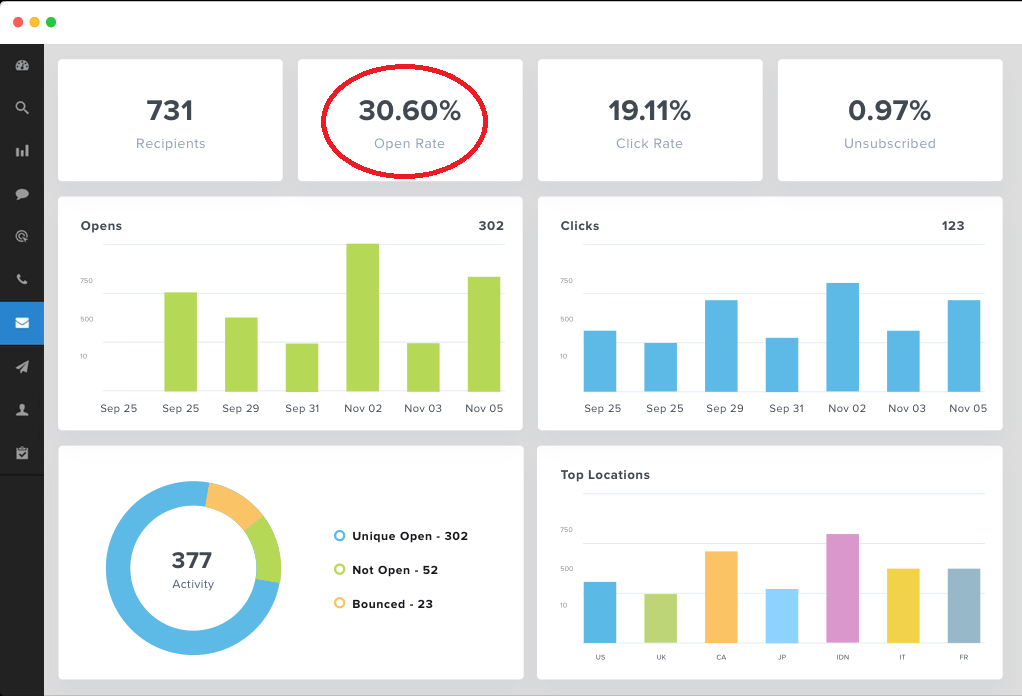
The open rate measures the percentage of subscribers who opened your email. This is a crucial metric as it indicates how engaging your email subject lines and preview text are. A high open rate means your subscribers are interested in your content.
According to data from Mailchimp, the average open rate across all industries is 21.5%. However, the open rate can vary significantly depending on your industry, target audience, and email cadence.
2. Click-Through Rate (CTR)
The click-through rate measures the percentage of recipients who clicked on one or more links within your email. This metric gives you an indication of how compelling your email content is and how effectively you’re driving readers to take action.
The average CTR across all industries is 2.6%, according to Mailchimp. However, a study by Constant Contact found that ecommerce businesses have an average CTR of 3.48%.
3. Conversion Rate
The conversion rate measures the percentage of email recipients who completed a desired action, such as making a purchase, signing up for a service, or downloading a lead magnet. This is the ultimate metric that ties your email marketing efforts directly to your bottom line.
The average conversion rate for ecommerce emails is 2.3%, according to the Constant Contact study. However, the conversion rate can vary widely depending on the specific goal of your email campaign.
4. Bounce Rate
The bounce rate measures the percentage of emails that were undelivered. There are two types of bounces:
- Hard bounces: Emails that could not be delivered due to a permanent reason, such as an invalid email address.
- Soft bounces: Emails that could not be delivered due to a temporary reason, such as a full inbox or server issue.
A high bounce rate can negatively impact your sender reputation and email deliverability. The average bounce rate for email campaigns is around 0.7%, according to Mailchimp’s data.
5. Unsubscribe Rate
The unsubscribe rate measures the percentage of subscribers who opted out of your email list. A high unsubscribe rate can be a sign that your emails are not resonating with your audience or that you’re sending too many emails.
The average unsubscribe rate across all industries is 0.1%, according to Mailchimp. However, for ecommerce businesses, the unsubscribe rate is typically higher at around 0.17%, as found in the Constant Contact study.
6. List Growth Rate
The list growth rate measures the percentage increase or decrease in the size of your email list over time. This metric is important because a growing email list is a sign of a healthy and engaged subscriber base.
There is no industry benchmark for list growth rate, as it can vary significantly depending on your list-building strategies and the maturity of your email program.
7. Revenue per Email
Revenue per email is a metric that directly ties your email marketing efforts to your revenue. It calculates the average revenue generated per email sent.
This metric can be calculated by dividing your total email revenue by the number of emails sent. There is no industry benchmark for revenue per email, as it will depend on your average order value, email conversion rate, and email send volume.
Analyzing Your Email Marketing Data
Now that you know the key email marketing metrics to track, let’s dive into how to analyze your data and uncover insights to improve your performance.
1. Establish Benchmarks
Before you can start optimizing your email marketing strategy, you need to establish benchmarks for your industry and business. Compare your metrics to the industry averages we mentioned earlier, as well as your historical performance.
This will help you identify areas of strength and weakness, and set realistic goals for improvement.
2. Segment and Analyze by List, Campaign, and Subscriber Behavior
Analyzing your email data at a granular level can provide valuable insights. Break down your metrics by:
- Email list: Analyze how different segments of your email list (e.g., new subscribers, loyal customers, lapsed subscribers) are performing.
- Email campaign: Evaluate the performance of individual campaigns to identify which types of content and offers resonate best with your audience.
- Subscriber behavior: Examine how different subscriber actions (e.g., clicks, conversions, unsubscribes) correlate with your overall email performance.
This level of analysis can help you refine your targeting, messaging, and cadence to optimize your email marketing strategy.
3. Identify Patterns and Trends
Look for patterns and trends in your email marketing data over time. Are there certain days of the week, times of day, or seasons when your emails perform better? Are there any significant changes in your metrics that coincide with specific events or campaigns?
Identifying these patterns can inform when and how you schedule and send your email campaigns.
4. Benchmark Against Competitors
If possible, benchmark your email marketing performance against your competitors or industry peers. This can be a challenge, as email data is typically not publicly available. However, you may be able to find benchmarks through industry reports, forums, or by reaching out to your network.
Comparing your performance to your competitors can give you a better sense of where you stand and how you can improve.
5. Correlate Email Metrics with Business Outcomes
Ultimately, the goal of your email marketing efforts is to drive tangible business outcomes, such as increased revenue, customer acquisition, or engagement. Look for correlations between your email metrics and these key business metrics.
For example, you might find that a higher click-through rate on your abandoned cart emails directly leads to a higher conversion rate and more recovered revenue. Understanding these relationships can help you prioritize the email marketing KPIs that matter most to your business.
Optimizing Your Email Marketing Strategy
Once you’ve analyzed your email marketing data, it’s time to put your insights into action. Here are some strategies for optimizing your email marketing performance:
1. Improve Email Subject Lines and Preview Text
Your email subject line and preview text are the first things subscribers see, so they play a critical role in driving open rates. Test different subject line styles, lengths, and keywords to see what resonates best with your audience.
For example, Omnisend found that emojis in email subject lines can increase open rates by up to 29%.
2. Enhance Email Content and Design
Analyze your email click-through and conversion rates to identify areas for improvement in your email content and design. Some best practices include:
- Using clear, compelling calls-to-action
- Incorporating eye-catching visual elements
- Optimizing for mobile devices
- Personalizing content based on subscriber data
You can also leverage user-generated content and social proof to make your emails more engaging.
3. Improve Email Targeting and Segmentation
Segmenting your email list and tailoring your content to specific subscriber groups can significantly boost your email performance. Use data on subscriber behavior, demographics, and purchase history to create targeted email campaigns.
According to Campaign Monitor, segmented email campaigns can achieve 14.31% higher open rates and 100.95% higher click-through rates compared to non-segmented campaigns.
4. Optimize Email Timing and Cadence
The timing and frequency of your email campaigns can have a big impact on engagement and deliverability. Analyze your historical data to determine the best days and times to send your emails, as well as the optimal cadence for your audience.
For example, a study by Omnisend found that ecommerce businesses see the highest open rates when sending emails on Thursdays.
5. Improve Email Deliverability
Maintaining a healthy email sender reputation is crucial for ensuring your messages reach the inbox. Monitor your bounce and unsubscribe rates, and take steps to improve deliverability, such as:
- Regularly cleaning your email list
- Implementing double opt-in for new subscribers
- Authenticating your email domain with SPF and DKIM
- Avoiding spam-like content and practices
You can also leverage email validation services to identify and remove invalid email addresses from your list.
6. Experiment and Test Continuously
Email marketing is an iterative process, so it’s important to continuously experiment and test new strategies. Use A/B testing to compare different subject lines, content, and design elements, and analyze the results to inform your ongoing optimizations.
Remember to document your experiments, track your KPIs, and share your learnings with the rest of your marketing team to continuously improve your email marketing performance.
Conclusion
Analyzing your ecommerce email marketing performance is crucial for maximizing the ROI of your email campaigns. By monitoring key metrics, identifying trends and patterns, and implementing data-driven optimizations, you can continuously improve your email marketing strategy and drive tangible business results.
Share:👇
Subscribe to get more of such amazing content 👇
Related post
- How to Start a Print on Demand Business: A Comprehensive Guide
 Share:👇 Starting a print on demand (POD) business can be an exciting and profitable venture, especially in today’s era of e-commerce. Whether you’re an artist looking to monetize your designs or an entrepreneur exploring new business avenues, the POD model offers a low-risk, scalable method of selling custom products without the need for inventory or… Read more: How to Start a Print on Demand Business: A Comprehensive Guide
 - Mistakes Most Young Entrepreneurs Make When Starting an Online Business
 Share:👇 Starting an online business can be an exciting and rewarding venture for young entrepreneurs, but it also comes with its fair share of challenges. Many young entrepreneurs make common mistakes that can hinder their success and lead to the downfall of their businesses. In this comprehensive guide, we will explore the most prevalent mistakes… Read more: Mistakes Most Young Entrepreneurs Make When Starting an Online Business
 - Starting a Dropshipping Website on Spocket: What You Need to Know
 Share:👇 Introduction In the ever-evolving world of e-commerce, dropshipping has emerged as a game-changing business model that has revolutionized the way entrepreneurs approach online retail. Spocket, a leading dropshipping platform, has become a popular choice for those looking to venture into this lucrative space. [1] This comprehensive guide will delve into the intricacies of starting… Read more: Starting a Dropshipping Website on Spocket: What You Need to Know
 - The 10 Best Dropshipping Websites for Ecommerce Success in 2024
 Share:👇 Introduction In the ever-evolving world of ecommerce, dropshipping has emerged as a game-changing business model that allows entrepreneurs to start and scale online stores without the hassle of managing inventory. By partnering with reliable suppliers, dropshipping enables you to offer a wide range of products to your customers while minimizing upfront costs and overhead.… Read more: The 10 Best Dropshipping Websites for Ecommerce Success in 2024
 - The Ultimate Guide to the Best Affiliate Marketing Websites
 Share:👇 Introduction Affiliate marketing has become one of the most popular ways to earn passive income online. With the right strategies and tools, you can turn your website into a revenue-generating machine. In this guide, we’ll explore the best affiliate marketing websites, provide in-depth reviews, and share tips on how to maximize your earnings. What… Read more: The Ultimate Guide to the Best Affiliate Marketing Websites
 - Mastering Long-Form Content for SEO in 2024 and Beyond
 Share:👇 In the ever-evolving world of search engine optimization (SEO), the importance of long-form content has become increasingly apparent. As Google and other search engines continue to prioritize high-quality, in-depth information, crafting compelling long-form content has become a crucial strategy for businesses and content creators looking to rank higher in search results and engage their… Read more: Mastering Long-Form Content for SEO in 2024 and Beyond
 - The Rise of AI in SEO: Navigating the Changing Landscape of Search Engine Optimization in 2024 and Beyond
 Share:👇 Introduction: The Evolving Role of AI in SEO As we look ahead to 2024 and beyond, the world of search engine optimization (SEO) is undergoing a profound transformation, driven largely by the rapid advancements in artificial intelligence (AI) technology. The impact of AI on SEO is undeniable, presenting both opportunities and challenges for marketers,… Read more: The Rise of AI in SEO: Navigating the Changing Landscape of Search Engine Optimization in 2024 and Beyond
 - The Transformative Role of Blockchain in Digital Marketing
 Share:👇 Introduction In the ever-evolving landscape of digital marketing, the emergence of blockchain technology has sparked a revolution, redefining the way businesses engage with their customers and approach their marketing strategies. As the digital world continues to grapple with issues of transparency, data security, and trust, blockchain has emerged as a game-changing solution, offering a… Read more: The Transformative Role of Blockchain in Digital Marketing
 - Unlocking the Power of Facebook Ads: A Comprehensive Guide to Maximizing ROI
 Share:👇 In the ever-evolving digital landscape, Facebook ads have emerged as a powerful tool for businesses of all sizes to reach and engage their target audience. With over 2.9 billion monthly active users, Facebook provides unparalleled access to a vast and diverse customer base, making it an essential component of any comprehensive marketing strategy. However,… Read more: Unlocking the Power of Facebook Ads: A Comprehensive Guide to Maximizing ROI
 - The Future of Affiliate Marketing: Navigating the Evolving Landscape
 Share:👇 Introduction: The Affiliate Marketing Landscape in Flux In the ever-changing world of digital marketing, affiliate marketing has emerged as a powerful and lucrative strategy for businesses and individuals alike. As the industry continues to evolve, it’s crucial for both seasoned and aspiring affiliate marketers to stay ahead of the curve and understand the trends… Read more: The Future of Affiliate Marketing: Navigating the Evolving Landscape


 Hubgenus