
Share:👇
Introduction
In today’s competitive ecommerce landscape, capturing and converting potential customers is more challenging than ever before. One of the most effective ways to re-engage shoppers who have browsed your site but not made a purchase is through a strategic browse abandonment email sequence.
Browse abandonment emails are triggered when a user browses your website and adds items to their cart, but then leaves the site without completing the purchase. These targeted emails aim to entice the user to return and finish their transaction, ultimately driving additional sales and revenue for your business.
In this comprehensive guide, we’ll explore the key elements of a winning browse abandonment email sequence, provide best practices for implementation, and share real-world examples to inspire your own campaigns. By the end, you’ll have a roadmap for crafting a browse abandonment email series that converts.
Understanding Browse Abandonment
Before we dive into the nitty-gritty of building out your browse abandonment email sequence, it’s important to first understand the fundamentals of browse abandonment and why it’s a crucial part of any ecommerce marketing strategy.
Browse abandonment refers to the phenomenon where a website visitor browses your products, adds items to their cart, but then exits the site without completing their purchase. This is a common occurrence, with studies showing that the average cart abandonment rate across industries is around 69.57% [1].
There are a variety of reasons why shoppers may abandon their carts, including:
- Unexpected shipping costs
- Complicated checkout process
- Comparison shopping on other sites
- Website technical issues
- Wanting to “save for later”
- Needing to get approval from others
Regardless of the specific reason, browse abandonment represents a significant missed opportunity for ecommerce businesses. After all, these users have already shown purchase intent by browsing and adding items to their cart. Capturing them with a strategic email sequence can be a highly effective way to drive them back to your site and convert them into paying customers.
The Anatomy of a Winning Browse Abandonment Email Sequence
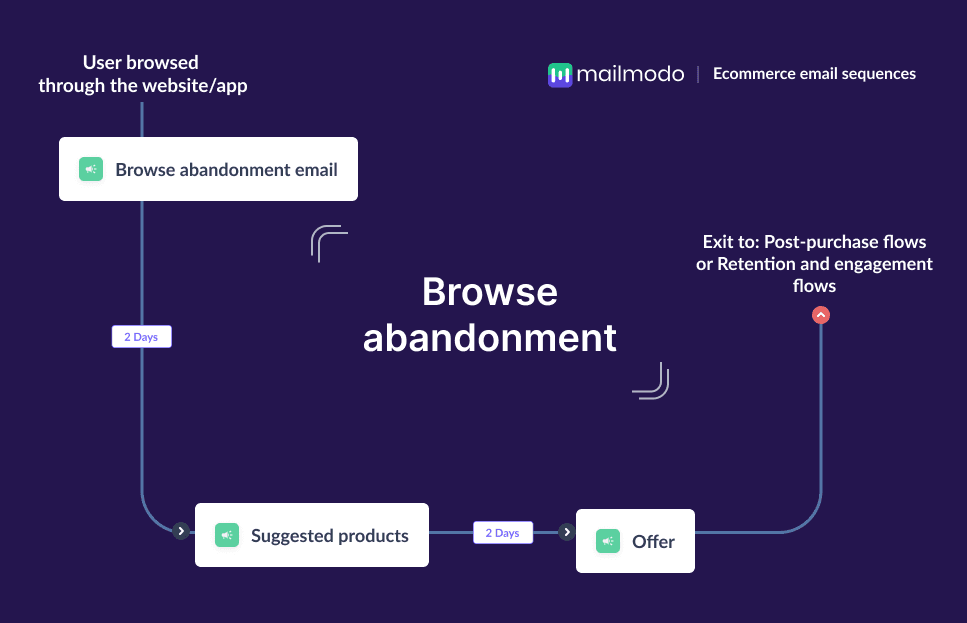
An effective browse abandonment email sequence typically consists of 3-5 emails sent over the course of several days. The goal is to gently nudge the user to return to your site and complete their purchase, using a combination of persuasive copy, compelling visuals, and strategic offers.
Here’s a closer look at the key elements that make up a winning browse abandonment email sequence:
- Timing and Cadence
The timing and cadence of your browse abandonment emails is critical. The first email should be sent within 1-2 hours of the abandoned browse event, while the user’s intent is still fresh. Subsequent emails can then be spaced out over the next 2-7 days, gradually increasing the sense of urgency. - Personalization
Personalization is key to making your browse abandonment emails feel relevant and valuable to the recipient. At minimum, you should include the user’s name and the specific products they browsed or added to their cart. Advanced personalization can also incorporate information like browsing behavior, location, and past purchase history. - Compelling Copy
The copy in your browse abandonment emails should strike a balance between friendly and persuasive. You want to acknowledge the user’s interest in your products, remind them of what they left behind, and give them a clear call-to-action to return and complete their purchase. Avoid overly salesy language and focus on building a connection. - Visuals and Imagery
Visuals play a critical role in browse abandonment emails, helping to grab the user’s attention and showcase the products they were interested in. Be sure to include high-quality product images, along with any relevant lifestyle imagery that aligns with your brand aesthetic. - Offers and Incentives
Providing the right offer or incentive can be a powerful way to entice users to return to your site and complete their purchase. This could include a discount code, free shipping, a limited-time sale, or a special bundle offer. Just be sure the offer is valuable enough to drive action without devaluing your products. - Social Proof and Testimonials
Incorporating social proof elements, such as customer reviews or testimonials, can help build trust and credibility, making users more likely to convert. This signals to the recipient that others have had a positive experience with your products or brand. - Scarcity and Urgency
Creating a sense of scarcity or urgency can be a powerful motivator for users to take action. This could involve highlighting that an item is low in stock, a sale is ending soon, or that the user’s cart will expire if they don’t return. - Clear Calls-to-Action (CTAs)
Each email in your browse abandonment sequence should have a clear, prominent call-to-action that makes it easy for the user to return to their cart and complete their purchase. Use action-oriented language and make the CTA visually stand out. - Mobile Optimization
Given the prevalence of mobile shopping, it’s essential that your browse abandonment emails are optimized for mobile devices. This includes using a responsive design, ensuring images and copy are easily readable on smaller screens, and making the CTA easy to tap on a smartphone. - Testing and Optimization
Continuously testing and optimizing your browse abandonment email sequence is key to driving the best possible results. This could involve experimenting with different subject lines, copy, offers, and CTAs to see what resonates most with your audience.
Browse Abandonment Email Sequence Example
To bring these concepts to life, let’s take a look at an example of a 3-email browse abandonment sequence:
Email 1 (Sent 1-2 hours after abandonment)
Subject Line: Did you forget something in your cart?
Hi [First Name],
I noticed you were browsing our [Product Category] collection on [Site Name] and added a few items to your cart, but didn’t complete your purchase. I wanted to reach out and make sure you didn’t forget about those items!
Here’s a quick reminder of what you left behind:
[Product Image] – [Product Name]
[Product Description]
[Product Price]
If you’re still interested in this item, you can click the button below to easily return to your cart and complete your order.
[Call-to-Action Button]
Let me know if you have any other questions! I’m here to help.
Best,
[Your Name]
[Company Name]
Email 2 (Sent 2-3 days after Email 1)
Subject Line: Your [Product Name] is waiting for you
Hi [First Name],
Just wanted to check in and see if you’re still interested in the [Product Name] you had in your cart on [Site Name]. I noticed it’s still sitting there, waiting for you!
In case you need a little extra nudge, I wanted to let you know that we’re offering 15% off all [Product Category] for the next 48 hours.
That means you can get the [Product Name] for just [Discounted Price]. But hurry, this deal ends soon!
[Call-to-Action Button]
Let me know if you have any other questions!
Best,
[Your Name]
[Company Name]
Email 3 (Sent 5-7 days after Email 2)
Subject Line: Last chance to get the [Product Name]
Hi [First Name],
I wanted to reach out one last time about the [Product Name] you had in your cart on [Site Name]. This item has been really popular lately, and I want to make sure you don’t miss out!
As a special offer, we’re giving you free shipping on your order if you complete your purchase in the next 24 hours. That’s a $7 value, just for you.
Don’t let this deal slip away – click the button below to finish checking out and get your [Product Name] shipped for free.
[Call-to-Action Button]
Let me know if you have any other questions! I’m here to help.
Best,
[Your Name]
[Company Name]
This example highlights key elements of a winning browse abandonment sequence, including:
- Personalized messaging that references the specific products the user browsed
- Compelling product details and imagery to remind the user what they left behind
- Strategic offers and incentives to drive the user back to complete their purchase
- Clear, prominent calls-to-action throughout each email
- A sense of scarcity and urgency to create motivation to act
Of course, the specific details of your browse abandonment sequence will depend on your unique business, product offerings, and target audience. But this example should give you a solid foundation to build upon.
Best Practices for Browse Abandonment Emails
Beyond the core elements of the email sequence itself, there are a number of best practices to keep in mind when crafting your browse abandonment campaigns:
- Integrate with Your eCommerce Platform: Ensure your browse abandonment emails are seamlessly integrated with your ecommerce platform or shopping cart software. This will allow you to automatically trigger emails based on user behavior and personalize the content accordingly.
- Leverage Customer Data: Tap into your customer data to personalize the browsing and purchase history details included in your emails. This could include past purchases, browse history, and demographic information.
- Highlight Relevant Products: Focus on showcasing the specific products the user browsed or added to their cart, rather than just general product recommendations. This personal touch can be a powerful motivator.
- Experiment with Offers: Test different types of offers and incentives, such as discounts, free shipping, or product bundles, to see what resonates best with your audience and drives the highest conversion rates.
- Optimize for Mobile: As mentioned earlier, mobile optimization is crucial for browse abandonment emails. Ensure your design, copy, and CTAs are all crafted with mobile users in mind.
- Monitor and Analyze Performance: Continuously track the performance of your browse abandonment email sequence, measuring metrics like open rates, click-through rates, and conversion rates. Use this data to identify opportunities for optimization and improvement.
- Coordinate with Other Channels: Integrate your browse abandonment emails with other marketing channels, such as retargeting ads or push notifications, to create a cohesive, cross-channel experience for your customers.
- Comply with Anti-Spam Regulations: Make sure your browse abandonment emails comply with anti-spam laws and regulations, such as the CAN-SPAM Act in the US or GDPR in the EU. This includes including a clear unsubscribe link and other required disclosures.
- Maintain Brand Consistency: Ensure your browse abandonment emails align with your overall brand identity in terms of design, tone of voice, and messaging. This helps reinforce your brand and builds trust with customers.
- Leverage Customer Insights: Regularly collect feedback from customers and use those insights to inform the content and strategy of your browse abandonment email sequence. Understanding their pain points and preferences can help you create more effective campaigns.
By following these best practices, you can craft a browse abandonment email sequence that effectively re-engages your customers, drives them back to your site, and boosts your overall sales and revenue.
Conclusion
Browse abandonment is a ubiquitous challenge in the world of ecommerce, but it also presents a significant opportunity for savvy marketers. By implementing a strategic, multi-touch email sequence, you can effectively recapture the interest of users who have already shown purchase intent and drive them to complete their transactions.
Remember, the key to a winning browse abandonment email sequence lies in striking the right balance of personalization, persuasion, and value-added offers. Continuously test, iterate, and optimize your approach to ensure you’re delivering the most relevant and compelling experience for your customers.
With the right browse abandonment email strategy in place, you can turn abandoned carts into loyal customers and drive sustainable growth for your ecommerce business.
References
[1] Baymard Institute. (2023). Average Cart Abandonment Rate. [online] Available at: https://baymard.com/lists/cart-abandonment-rate [Accessed 30 Jul 2024].
Share:👇
Subscribe to get more of such amazing content 👇
Related post
- How to Start a Print on Demand Business: A Comprehensive Guide
 Share:👇 Starting a print on demand (POD) business can be an exciting and profitable venture, especially in today’s era of e-commerce. Whether you’re an artist looking to monetize your designs or an entrepreneur exploring new business avenues, the POD model offers a low-risk, scalable method of selling custom products without the need for inventory or… Read more: How to Start a Print on Demand Business: A Comprehensive Guide
 - Mistakes Most Young Entrepreneurs Make When Starting an Online Business
 Share:👇 Starting an online business can be an exciting and rewarding venture for young entrepreneurs, but it also comes with its fair share of challenges. Many young entrepreneurs make common mistakes that can hinder their success and lead to the downfall of their businesses. In this comprehensive guide, we will explore the most prevalent mistakes… Read more: Mistakes Most Young Entrepreneurs Make When Starting an Online Business
 - Starting a Dropshipping Website on Spocket: What You Need to Know
 Share:👇 Introduction In the ever-evolving world of e-commerce, dropshipping has emerged as a game-changing business model that has revolutionized the way entrepreneurs approach online retail. Spocket, a leading dropshipping platform, has become a popular choice for those looking to venture into this lucrative space. [1] This comprehensive guide will delve into the intricacies of starting… Read more: Starting a Dropshipping Website on Spocket: What You Need to Know
 - The 10 Best Dropshipping Websites for Ecommerce Success in 2024
 Share:👇 Introduction In the ever-evolving world of ecommerce, dropshipping has emerged as a game-changing business model that allows entrepreneurs to start and scale online stores without the hassle of managing inventory. By partnering with reliable suppliers, dropshipping enables you to offer a wide range of products to your customers while minimizing upfront costs and overhead.… Read more: The 10 Best Dropshipping Websites for Ecommerce Success in 2024
 - The Ultimate Guide to the Best Affiliate Marketing Websites
 Share:👇 Introduction Affiliate marketing has become one of the most popular ways to earn passive income online. With the right strategies and tools, you can turn your website into a revenue-generating machine. In this guide, we’ll explore the best affiliate marketing websites, provide in-depth reviews, and share tips on how to maximize your earnings. What… Read more: The Ultimate Guide to the Best Affiliate Marketing Websites
 - Mastering Long-Form Content for SEO in 2024 and Beyond
 Share:👇 In the ever-evolving world of search engine optimization (SEO), the importance of long-form content has become increasingly apparent. As Google and other search engines continue to prioritize high-quality, in-depth information, crafting compelling long-form content has become a crucial strategy for businesses and content creators looking to rank higher in search results and engage their… Read more: Mastering Long-Form Content for SEO in 2024 and Beyond
 - The Rise of AI in SEO: Navigating the Changing Landscape of Search Engine Optimization in 2024 and Beyond
 Share:👇 Introduction: The Evolving Role of AI in SEO As we look ahead to 2024 and beyond, the world of search engine optimization (SEO) is undergoing a profound transformation, driven largely by the rapid advancements in artificial intelligence (AI) technology. The impact of AI on SEO is undeniable, presenting both opportunities and challenges for marketers,… Read more: The Rise of AI in SEO: Navigating the Changing Landscape of Search Engine Optimization in 2024 and Beyond
 - The Transformative Role of Blockchain in Digital Marketing
 Share:👇 Introduction In the ever-evolving landscape of digital marketing, the emergence of blockchain technology has sparked a revolution, redefining the way businesses engage with their customers and approach their marketing strategies. As the digital world continues to grapple with issues of transparency, data security, and trust, blockchain has emerged as a game-changing solution, offering a… Read more: The Transformative Role of Blockchain in Digital Marketing
 - Unlocking the Power of Facebook Ads: A Comprehensive Guide to Maximizing ROI
 Share:👇 In the ever-evolving digital landscape, Facebook ads have emerged as a powerful tool for businesses of all sizes to reach and engage their target audience. With over 2.9 billion monthly active users, Facebook provides unparalleled access to a vast and diverse customer base, making it an essential component of any comprehensive marketing strategy. However,… Read more: Unlocking the Power of Facebook Ads: A Comprehensive Guide to Maximizing ROI
 - The Future of Affiliate Marketing: Navigating the Evolving Landscape
 Share:👇 Introduction: The Affiliate Marketing Landscape in Flux In the ever-changing world of digital marketing, affiliate marketing has emerged as a powerful and lucrative strategy for businesses and individuals alike. As the industry continues to evolve, it’s crucial for both seasoned and aspiring affiliate marketers to stay ahead of the curve and understand the trends… Read more: The Future of Affiliate Marketing: Navigating the Evolving Landscape


 Hubgenus