
Share:👇
How Generative AI is Revolutionizing Business Productivity
In the rapidly evolving landscape of technology, a new frontier has emerged that is poised to transform the way businesses operate – generative artificial intelligence (AI). This groundbreaking technology has the potential to dramatically boost productivity across a wide range of industries, unlocking unprecedented levels of efficiency and innovation.
Generative AI, a subset of the broader field of AI, is defined by its ability to create new content, whether it be text, images, audio, or even computer code. Unlike traditional AI systems that are primarily focused on analysis and decision-making, generative AI models are trained on vast datasets to generate original outputs that mimic human-like creativity and problem-solving.
The rise of generative AI has been nothing short of meteoric. In November 2022, the release of ChatGPT, a language model developed by OpenAI, captivated the world with its remarkable ability to engage in natural conversations and produce human-like text on a wide range of topics. Just four months later, OpenAI unveiled an even more advanced model, GPT-4, with significantly improved capabilities. [1]
Similarly, Anthropic’s generative AI, Claude, has seen its processing power skyrocket, going from handling around 9,000 tokens of text in March 2023 to a staggering 100,000 tokens per minute by May of the same year – the equivalent of an average novel. [1] Google, not to be outdone, has also announced a slew of new generative AI-powered features, including its Search Generative Experience and the PaLM 2 language model that will power its Bard chatbot. [1]
These rapid advancements in generative AI capabilities have not gone unnoticed by the business world. Executives and entrepreneurs alike are recognizing the immense potential of this technology to transform their operations, boost productivity, and gain a competitive edge in their respective markets.
The Impact of Generative AI on Business Productivity
The impact of generative AI on business productivity can be quantified in staggering numbers. According to a recent report by McKinsey, the use of generative AI could add the equivalent of $2.6 trillion to $4.4 trillion in annual value to the global economy. [2] To put that into perspective, that’s roughly the size of the United Kingdom’s entire GDP in 2021.
This potential value addition represents a 15 to 40 percent increase in the impact of all artificial intelligence, which was previously estimated to unlock between $11 trillion and $17.7 trillion in economic value. [2] And the benefits of generative AI are not limited to a few select industries – the report found that the technology could have a significant impact across all sectors, from banking and high-tech to life sciences and retail.
The key to unlocking this productivity boost lies in the diverse range of use cases for generative AI. The McKinsey report identified 63 distinct use cases spanning 16 different business functions, each with the potential to deliver measurable outcomes in the form of cost savings, revenue enhancements, or both. [2]
Let’s explore some of the most impactful ways in which generative AI is transforming business productivity:
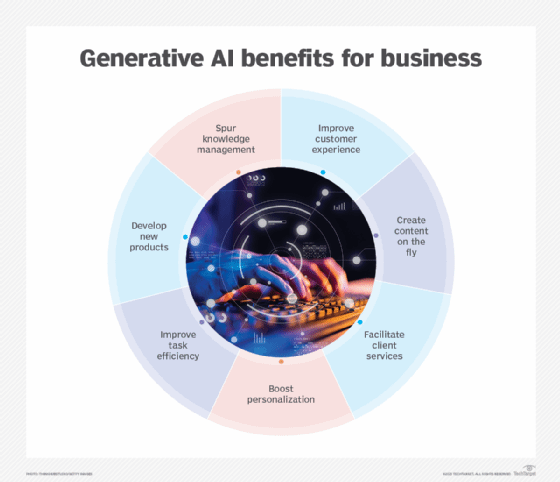
- Customer Operations: Generative AI is revolutionizing the way businesses interact with their customers. By leveraging language models like ChatGPT, companies can create highly personalized and engaging customer experiences, from automated chatbots that can handle a wide range of inquiries to virtual assistants that can provide tailored product recommendations. [2] This not only enhances customer satisfaction but also frees up human customer service representatives to focus on more complex or strategic tasks.
- Marketing and Sales: Generative AI is proving to be a powerful tool for content creation, enabling businesses to generate high-quality, personalized marketing materials at scale. From crafting compelling social media posts and email campaigns to producing visually stunning product descriptions and marketing collateral, generative AI can dramatically improve the efficiency and effectiveness of marketing efforts. [2] Additionally, the technology’s ability to analyze customer data and generate personalized product recommendations can lead to increased sales and customer loyalty.
- Software Engineering: One of the most exciting applications of generative AI in the business world is its impact on software development. By leveraging language models like GitHub Copilot, developers can now generate code snippets, debug errors, and even create entire software components based on natural language prompts. [2] This not only accelerates the software development process but also enables non-technical employees to contribute to the creation of new digital solutions, further boosting overall productivity.
- Research and Development (R&D): Generative AI is also proving to be a valuable tool in the R&D process, particularly in industries like life sciences and pharmaceuticals. The technology can be used to generate novel molecular structures, design experiments, and even analyze complex scientific data, all of which can lead to faster and more efficient product development. [2] This can translate into significant cost savings and accelerated time-to-market for new products and services.
These are just a few examples of the ways in which generative AI is transforming business productivity. The technology’s impact is far-reaching, touching on everything from customer service and marketing to software development and R&D.
Navigating the Challenges of Generative AI Adoption
While the potential benefits of generative AI are undeniable, the path to successful implementation is not without its challenges. As with any transformative technology, businesses must navigate a complex landscape of risks and considerations to ensure that they are leveraging the technology in a responsible and effective manner.
- Data Quality and Bias: One of the primary concerns with generative AI is the quality and representativeness of the data used to train the models. If the training data is incomplete, biased, or inaccurate, the resulting AI outputs may reflect and amplify those same issues. [3] Businesses must invest in robust data governance practices, including data auditing, cleaning, and monitoring, to ensure that their generative AI systems are producing reliable and unbiased results.
- Ethical Considerations: The use of generative AI also raises a host of ethical concerns, from the potential for job displacement due to automation to the risk of AI-generated content being used for malicious purposes, such as disinformation or fraud. [3] Businesses must carefully consider the ethical implications of their generative AI deployments and work to implement safeguards and guidelines that prioritize transparency, accountability, and the well-being of their employees and customers.
- Regulatory Compliance: As the use of generative AI becomes more widespread, governments around the world are scrambling to develop new regulations and guidelines to govern the technology’s use. Businesses must stay abreast of these evolving regulatory landscapes and ensure that their generative AI deployments are compliant with all relevant laws and industry standards. [3]
- Workforce Transformation: The adoption of generative AI will inevitably lead to significant changes in the way work is performed, with many routine tasks and activities being automated or augmented by the technology. [2] Businesses must proactively invest in upskilling and reskilling their workforce to ensure that employees are equipped with the necessary skills and knowledge to thrive in this new, AI-powered environment.
Overcoming these challenges will require a multi-faceted approach that combines strategic planning, technological expertise, and a deep understanding of the human and societal implications of generative AI. Businesses that are able to navigate these waters successfully will be well-positioned to reap the full benefits of this transformative technology.
Strategies for Successful Generative AI Adoption
As businesses seek to harness the power of generative AI to boost their productivity, there are several key strategies they can employ to ensure a successful and sustainable implementation:
- Prioritize Use Cases: Given the breadth of potential applications for generative AI, it’s essential for businesses to carefully prioritize the use cases that are most likely to deliver tangible and measurable benefits. This may involve conducting a thorough assessment of the organization’s pain points, identifying areas where generative AI can have the greatest impact, and developing a phased implementation plan that focuses on the most promising use cases first. [2]
- Invest in Talent and Expertise: Effective deployment of generative AI requires a deep understanding of the technology, as well as the ability to navigate the complex landscape of data management, ethical considerations, and workforce transformation. Businesses should invest in building a dedicated team of AI experts, data scientists, and change management professionals who can guide the organization through the adoption process and ensure that the technology is being leveraged in a responsible and impactful manner. [3]
- Foster a Culture of Innovation: Embracing generative AI requires a fundamental shift in mindset and culture within the organization. Businesses should cultivate an environment that encourages experimentation, risk-taking, and continuous learning, empowering employees at all levels to explore the potential of this transformative technology. This may involve implementing training programs, hackathons, and other initiatives that inspire and empower employees to harness the power of generative AI. [3]
- Develop Robust Governance Frameworks: As businesses integrate generative AI into their operations, it’s crucial to establish robust governance frameworks that address the ethical, regulatory, and security considerations associated with the technology. This may include developing clear policies and guidelines around data usage, model validation, and the responsible deployment of generative AI systems, as well as implementing rigorous monitoring and auditing processes to ensure ongoing compliance. [3]
- Collaborate with Ecosystem Partners: Navigating the complexities of generative AI adoption can be a daunting task, and businesses may benefit from partnering with a broader ecosystem of technology providers, industry experts, and academic institutions. By collaborating with these partners, businesses can access the latest research, best practices, and innovative solutions, ultimately accelerating their own generative AI initiatives and maximizing the return on their investments. [3]
By embracing these strategies, businesses can position themselves for success in the era of generative AI, unlocking unprecedented levels of productivity and positioning themselves for long-term growth and competitiveness.
The Future of Generative AI in Business
As the capabilities of generative AI continue to evolve at a breakneck pace, the potential for this technology to transform the business landscape is truly staggering. While the current use cases are already impressive, the future of generative AI in business is poised to be even more transformative.
One of the most exciting frontiers is the integration of generative AI with other emerging technologies, such as the Internet of Things (IoT), 5G, and edge computing. By combining the power of generative AI with the real-time data and processing capabilities of these technologies, businesses will be able to create truly intelligent, adaptive, and responsive systems that can optimize operations, enhance customer experiences, and drive innovation at unprecedented levels. [2]
For example, imagine a retail store equipped with IoT sensors and 5G connectivity, where generative AI models can analyze real-time data on foot traffic, product interactions, and customer sentiment to automatically generate personalized product recommendations, dynamic pricing strategies, and targeted marketing campaigns. [2] This level of hyper-personalization and responsiveness would not only boost sales and customer loyalty but also enable the business to make more informed, data-driven decisions that drive long-term growth.
Similarly, in the manufacturing sector, generative AI could be integrated with industrial IoT systems to optimize production workflows, predict equipment failures, and even design new products and processes. [2] By automating and augmenting the work of engineers, technicians, and operators, businesses can achieve significant gains in efficiency, quality, and cost savings.
Beyond these operational improvements, generative AI also holds immense potential for driving innovation and new business models. As the technology becomes more sophisticated, businesses may be able to leverage it to create entirely new products, services, and revenue streams that were previously unimaginable. [2]
For example, a software company could use generative AI to create custom, AI-powered applications tailored to the unique needs of individual customers, or a media company could generate personalized, AI-driven content experiences that keep audiences engaged and coming back for more.
The possibilities are truly endless, and the businesses that are able to stay ahead of the curve and harness the power of generative AI will be well-positioned to thrive in the years and decades to come.
Conclusion
In the fast-paced, ever-evolving world of business, the emergence of generative AI has the potential to be a true game-changer. By boosting productivity, enhancing customer experiences, and driving innovation, this transformative technology is poised to unlock unprecedented levels of value for organizations across a wide range of industries.
However, the successful adoption of generative AI is not without its challenges. Businesses must navigate a complex landscape of data quality, ethical considerations, and workforce transformation to ensure that they are leveraging the technology in a responsible and effective manner.
By prioritizing use cases, investing in talent and expertise, fostering a culture of innovation, developing robust governance frameworks, and collaborating with ecosystem partners, businesses can position themselves for success in the era of generative AI. And as the technology continues to evolve, the future holds even greater promise, with the potential for generative AI to be seamlessly integrated with other emerging technologies to create truly intelligent, adaptive, and responsive business systems.
The time to embrace generative AI is now. Those businesses that are able to harness the power of this transformative technology will not only boost their productivity and competitiveness but also position themselves for long-term growth and success in an increasingly dynamic and challenging business landscape.
Learn more:
- Economic potential of generative AI | McKinsey
- Generative AI Will Transform Your Ecommerce Business. Here’s How to Adapt.
- How Generative AI Boosts E-commerce: 10 Key Strategies – Addepto
Share:👇
Subscribe to get more of such amazing content 👇
Related post
- How to Start a Print on Demand Business: A Comprehensive Guide
 Share:👇 Starting a print on demand (POD) business can be an exciting and profitable venture, especially in today’s era of e-commerce. Whether you’re an artist looking to monetize your designs or an entrepreneur exploring new business avenues, the POD model offers a low-risk, scalable method of selling custom products without the need for inventory or… Read more: How to Start a Print on Demand Business: A Comprehensive Guide
 - Mistakes Most Young Entrepreneurs Make When Starting an Online Business
 Share:👇 Starting an online business can be an exciting and rewarding venture for young entrepreneurs, but it also comes with its fair share of challenges. Many young entrepreneurs make common mistakes that can hinder their success and lead to the downfall of their businesses. In this comprehensive guide, we will explore the most prevalent mistakes… Read more: Mistakes Most Young Entrepreneurs Make When Starting an Online Business
 - Starting a Dropshipping Website on Spocket: What You Need to Know
 Share:👇 Introduction In the ever-evolving world of e-commerce, dropshipping has emerged as a game-changing business model that has revolutionized the way entrepreneurs approach online retail. Spocket, a leading dropshipping platform, has become a popular choice for those looking to venture into this lucrative space. [1] This comprehensive guide will delve into the intricacies of starting… Read more: Starting a Dropshipping Website on Spocket: What You Need to Know
 - The 10 Best Dropshipping Websites for Ecommerce Success in 2024
 Share:👇 Introduction In the ever-evolving world of ecommerce, dropshipping has emerged as a game-changing business model that allows entrepreneurs to start and scale online stores without the hassle of managing inventory. By partnering with reliable suppliers, dropshipping enables you to offer a wide range of products to your customers while minimizing upfront costs and overhead.… Read more: The 10 Best Dropshipping Websites for Ecommerce Success in 2024
 - The Ultimate Guide to the Best Affiliate Marketing Websites
 Share:👇 Introduction Affiliate marketing has become one of the most popular ways to earn passive income online. With the right strategies and tools, you can turn your website into a revenue-generating machine. In this guide, we’ll explore the best affiliate marketing websites, provide in-depth reviews, and share tips on how to maximize your earnings. What… Read more: The Ultimate Guide to the Best Affiliate Marketing Websites
 - Mastering Long-Form Content for SEO in 2024 and Beyond
 Share:👇 In the ever-evolving world of search engine optimization (SEO), the importance of long-form content has become increasingly apparent. As Google and other search engines continue to prioritize high-quality, in-depth information, crafting compelling long-form content has become a crucial strategy for businesses and content creators looking to rank higher in search results and engage their… Read more: Mastering Long-Form Content for SEO in 2024 and Beyond
 - The Rise of AI in SEO: Navigating the Changing Landscape of Search Engine Optimization in 2024 and Beyond
 Share:👇 Introduction: The Evolving Role of AI in SEO As we look ahead to 2024 and beyond, the world of search engine optimization (SEO) is undergoing a profound transformation, driven largely by the rapid advancements in artificial intelligence (AI) technology. The impact of AI on SEO is undeniable, presenting both opportunities and challenges for marketers,… Read more: The Rise of AI in SEO: Navigating the Changing Landscape of Search Engine Optimization in 2024 and Beyond
 - The Transformative Role of Blockchain in Digital Marketing
 Share:👇 Introduction In the ever-evolving landscape of digital marketing, the emergence of blockchain technology has sparked a revolution, redefining the way businesses engage with their customers and approach their marketing strategies. As the digital world continues to grapple with issues of transparency, data security, and trust, blockchain has emerged as a game-changing solution, offering a… Read more: The Transformative Role of Blockchain in Digital Marketing
 - Unlocking the Power of Facebook Ads: A Comprehensive Guide to Maximizing ROI
 Share:👇 In the ever-evolving digital landscape, Facebook ads have emerged as a powerful tool for businesses of all sizes to reach and engage their target audience. With over 2.9 billion monthly active users, Facebook provides unparalleled access to a vast and diverse customer base, making it an essential component of any comprehensive marketing strategy. However,… Read more: Unlocking the Power of Facebook Ads: A Comprehensive Guide to Maximizing ROI
 - The Future of Affiliate Marketing: Navigating the Evolving Landscape
 Share:👇 Introduction: The Affiliate Marketing Landscape in Flux In the ever-changing world of digital marketing, affiliate marketing has emerged as a powerful and lucrative strategy for businesses and individuals alike. As the industry continues to evolve, it’s crucial for both seasoned and aspiring affiliate marketers to stay ahead of the curve and understand the trends… Read more: The Future of Affiliate Marketing: Navigating the Evolving Landscape


 Hubgenus