
Share:👇
A comprehensive guide on affiliate marketing, covering its definition, importance, strategies, and best practices.
What is Affiliate Marketing?
Affiliate marketing is a performance-based marketing strategy where businesses reward affiliates (partners) for driving traffic or sales to their products or services through the affiliate’s marketing efforts¹. Affiliates earn a commission for each sale or action generated through their unique affiliate links. This model benefits both the business and the affiliate, creating a win-win situation.
Importance of Affiliate Marketing
Affiliate marketing is crucial for several reasons:
- Cost-Effective: Businesses only pay for actual sales or actions, making it a cost-effective marketing strategy.
- Scalable: Affiliates can promote multiple products from different companies, allowing for scalability without significant additional costs.
- Performance-Based: Affiliates are incentivized to perform well, as their earnings depend on the results they generate.
- Low Risk: For affiliates, the initial investment is minimal, often just the cost of a website or marketing tools.
- Passive Income: Affiliates can earn money continuously from their marketing efforts, even when they are not actively working².
How Affiliate Marketing Works
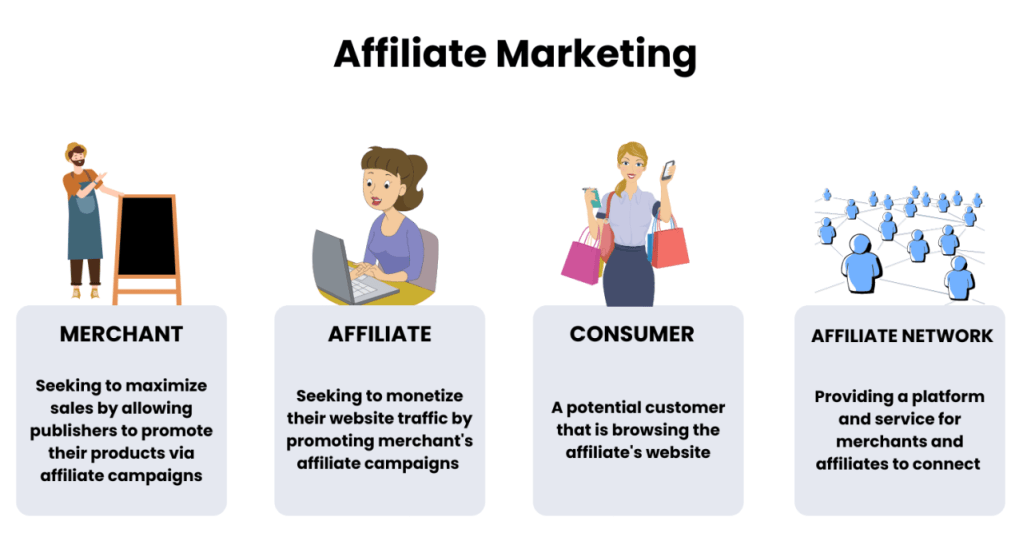
Affiliate marketing involves three main parties: the merchant (business), the affiliate (partner), and the consumer. Here’s how it works:
- Merchant: The business that creates and sells the product or service.
- Affiliate: The partner who promotes the merchant’s product or service.
- Consumer: The end user who purchases the product or service through the affiliate’s marketing efforts.
Steps in Affiliate Marketing
- Join an Affiliate Program: Affiliates sign up for an affiliate program offered by a merchant or through an affiliate network.
- Get Unique Affiliate Links: Affiliates receive unique tracking links to promote the merchant’s products or services.
- Promote Products: Affiliates use various marketing strategies to promote the products, such as blog posts, social media, email marketing, and paid advertising.
- Track Performance: The affiliate program tracks clicks, conversions, and sales generated through the affiliate’s links.
- Earn Commissions: Affiliates earn a commission for each sale or action generated through their links³.
Types of Affiliate Marketing
There are several types of affiliate marketing, each with its own approach and strategies:
- Content Marketing: Affiliates create valuable content, such as blog posts, videos, and tutorials, to attract and engage their audience.
- Email Marketing: Affiliates build an email list and promote products through targeted email campaigns.
- Social Media Marketing: Affiliates use social media platforms to share affiliate links and engage with their audience.
- Paid Advertising: Affiliates invest in paid advertising, such as Google Ads or Facebook Ads, to drive traffic to their affiliate links.
- Influencer Marketing: Influencers promote products to their followers, leveraging their credibility and reach⁴.
Developing an Affiliate Marketing Strategy
Creating a successful affiliate marketing strategy involves several key steps:
1. Choose a Niche
Selecting a niche is crucial for affiliate marketing success. A niche is a specific segment of the market that you will focus on. Consider the following when choosing a niche:
- Passion and Interest: Choose a niche you are passionate about and interested in.
- Market Demand: Ensure there is a demand for products in your chosen niche.
- Competition: Analyze the competition in your niche and identify opportunities for differentiation.
2. Select Affiliate Programs
Once you have chosen a niche, the next step is to select affiliate programs. Look for programs that offer:
- High-Quality Products: Promote products that are high-quality and relevant to your niche.
- Competitive Commissions: Choose programs that offer competitive commission rates.
- Reliable Tracking and Payments: Ensure the program has reliable tracking and timely payments.
3. Create Valuable Content
Content is the backbone of affiliate marketing. Create valuable and engaging content that resonates with your audience. Consider the following content types:
- Blog Posts: Write informative and helpful blog posts related to your niche.
- Product Reviews: Create detailed reviews of the products you are promoting.
- Tutorials and How-To Guides: Provide step-by-step guides and tutorials to help your audience.
- Videos: Create engaging videos that showcase the products and their benefits⁵.
4. Drive Traffic
Driving traffic to your affiliate links is essential for generating sales. Use a combination of organic and paid traffic strategies:
- SEO: Optimize your content for search engines to attract organic traffic.
- Social Media: Share your content on social media platforms to reach a broader audience.
- Email Marketing: Build an email list and send targeted email campaigns.
- Paid Advertising: Invest in paid advertising to drive targeted traffic to your affiliate links.
5. Track and Analyze Performance
Tracking and analyzing your performance is crucial for optimizing your affiliate marketing efforts. Use analytics tools to monitor:
- Clicks: Track the number of clicks on your affiliate links.
- Conversions: Measure the number of conversions (sales or actions) generated.
- Revenue: Calculate the revenue generated from your affiliate marketing efforts.
- ROI: Determine the return on investment (ROI) of your marketing campaigns.
Best Practices for Affiliate Marketing
To maximize the effectiveness of your affiliate marketing efforts, consider the following best practices:
1. Be Transparent
Transparency is key to building trust with your audience. Always disclose your affiliate relationships and be honest about the products you promote.
2. Focus on Quality
Quality over quantity is essential in affiliate marketing. Focus on promoting high-quality products that provide value to your audience.
3. Build Relationships
Building relationships with your audience and the merchants you work with is crucial. Engage with your audience, respond to their questions, and provide valuable insights.
4. Stay Up-to-Date
Affiliate marketing is constantly evolving. Stay up-to-date with the latest trends, tools, and strategies to stay competitive.
5. Test and Optimize
Continuously test and optimize your marketing efforts. Experiment with different content types, traffic sources, and promotional strategies to find what works best for your audience.
Common Challenges in Affiliate Marketing
Affiliate marketing comes with its own set of challenges. Here are some common challenges and how to overcome them:
1. Finding the Right Niche
Choosing the right niche can be challenging. Conduct thorough research to identify a niche that has demand, low competition, and aligns with your interests.
2. Driving Traffic
Generating traffic to your affiliate links can be difficult. Use a combination of SEO, social media, email marketing, and paid advertising to drive targeted traffic.
3. Building Trust
Building trust with your audience takes time. Be transparent, provide valuable content, and engage with your audience to build credibility.
4. Staying Compliant
Affiliate marketing is subject to various regulations and guidelines. Ensure you comply with relevant laws, such as disclosing affiliate relationships and adhering to advertising standards.
Tools for Affiliate Marketing
Several tools can help you manage and optimize your affiliate marketing efforts:
1. Affiliate Networks
Affiliate networks connect affiliates with merchants and provide tools for tracking and managing affiliate links. Popular affiliate networks include:
- Amazon Associates: One of the largest and most popular affiliate programs.
- ShareASale: Offers a wide range of products and services to promote.
- CJ Affiliate: Provides access to numerous brands and products.
2. Analytics Tools
Analytics tools help you track and analyze your performance. Popular analytics tools include:
- Google Analytics: Provides detailed insights into your website traffic and user behavior.
- ClickMeter: Tracks clicks, conversions, and other key metrics.
- Voluum: Offers advanced tracking and optimization features for affiliate marketers.
3. Content Creation Tools
Creating high-quality content is essential for affiliate marketing success. Here are some tools to help you create engaging content:
- Canva: A user-friendly graphic design tool for creating visuals.
- Adobe Spark: A tool for creating videos, graphics, and web pages.
- Piktochart: A tool for creating infographics and presentations.
4. SEO Tools
Optimizing your content for search engines is crucial for driving organic traffic. Here are some popular SEO tools:
- Ahrefs: A comprehensive SEO tool for keyword research, backlink analysis, and competitor analysis.
- SEMrush: An all-in-one marketing tool for SEO, PPC, and content marketing.
- Moz: A tool for keyword research, link building, and site audits.
Case Studies of Successful Affiliate Marketing Campaigns
1. Pat Flynn’s Smart Passive Income
Pat Flynn is a well-known affiliate marketer who shares his journey and strategies on his blog, Smart Passive Income. He promotes various products and services related to online business and marketing, earning significant commissions through his transparent and valuable content¹.
2. The Wirecutter
The Wirecutter, a product review site, was acquired by The New York Times for $30 million. The site generates revenue through affiliate commissions by providing in-depth reviews and recommendations for various products².
3. Michelle Schroeder-Gardner’s Making Sense of Cents
Michelle Schroeder-Gardner runs the personal finance blog Making Sense of Cents, where she shares tips on saving money, making money, and achieving financial freedom. She earns a substantial income through affiliate marketing by promoting financial products and services³.
Conclusion
Affiliate marketing is a powerful tool for businesses to expand their reach and for individuals to earn passive income. By understanding the importance of affiliate marketing, developing a comprehensive strategy, and following best practices
Share:👇
Subscribe to get more of such amazing content 👇
Related post
- How to Start a Print on Demand Business: A Comprehensive Guide
 Share:👇 Starting a print on demand (POD) business can be an exciting and profitable venture, especially in today’s era of e-commerce. Whether you’re an artist looking to monetize your designs or an entrepreneur exploring new business avenues, the POD model offers a low-risk, scalable method of selling custom products without the need for inventory or… Read more: How to Start a Print on Demand Business: A Comprehensive Guide
 - Mistakes Most Young Entrepreneurs Make When Starting an Online Business
 Share:👇 Starting an online business can be an exciting and rewarding venture for young entrepreneurs, but it also comes with its fair share of challenges. Many young entrepreneurs make common mistakes that can hinder their success and lead to the downfall of their businesses. In this comprehensive guide, we will explore the most prevalent mistakes… Read more: Mistakes Most Young Entrepreneurs Make When Starting an Online Business
 - Starting a Dropshipping Website on Spocket: What You Need to Know
 Share:👇 Introduction In the ever-evolving world of e-commerce, dropshipping has emerged as a game-changing business model that has revolutionized the way entrepreneurs approach online retail. Spocket, a leading dropshipping platform, has become a popular choice for those looking to venture into this lucrative space. [1] This comprehensive guide will delve into the intricacies of starting… Read more: Starting a Dropshipping Website on Spocket: What You Need to Know
 - The 10 Best Dropshipping Websites for Ecommerce Success in 2024
 Share:👇 Introduction In the ever-evolving world of ecommerce, dropshipping has emerged as a game-changing business model that allows entrepreneurs to start and scale online stores without the hassle of managing inventory. By partnering with reliable suppliers, dropshipping enables you to offer a wide range of products to your customers while minimizing upfront costs and overhead.… Read more: The 10 Best Dropshipping Websites for Ecommerce Success in 2024
 - The Ultimate Guide to the Best Affiliate Marketing Websites
 Share:👇 Introduction Affiliate marketing has become one of the most popular ways to earn passive income online. With the right strategies and tools, you can turn your website into a revenue-generating machine. In this guide, we’ll explore the best affiliate marketing websites, provide in-depth reviews, and share tips on how to maximize your earnings. What… Read more: The Ultimate Guide to the Best Affiliate Marketing Websites


 Hubgenus